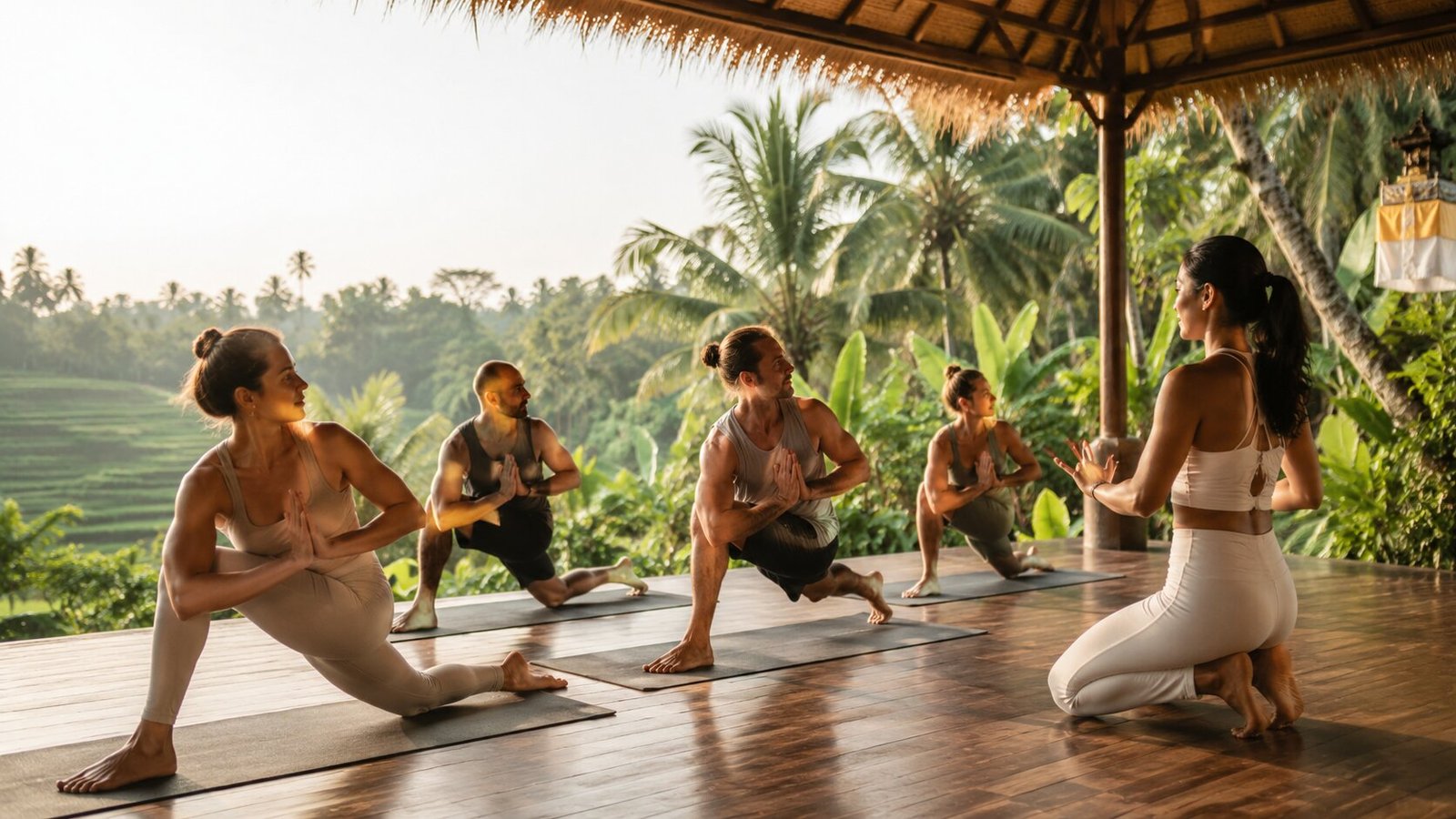
TL;DR: Bali is one of the best places in the world to complete Vinyasa yoga teacher training. This guide compares 10 of the best yoga teacher training schools in Bali for 2026 that include Vinyasa as part of their curriculum. The comparison looks at public review data, Yoga Alliance status, class size, teaching style, location, and pricing signals. Alongside Vinyasa flow, many of these schools also teach Hatha, Ashtanga, Yin, meditation, and philosophy. Start with the quick comparison below, then read the full school breakdowns before you choose a program.
Vinyasa, often called “flow,” is one of the most popular yoga styles taught in Bali. Most schools on the island include it in some form, which gives students plenty of choice. At the same time, it can make the decision harder. There are many schools, many teaching styles, and a wide range of prices. Nearly every school claims to offer a strong training, but the best choice depends on your goals, budget, preferred location, and learning style.
This guide compares strong Bali yoga schools that teach Vinyasa as one of their core or supporting modules. The selection is based on public review data from Google, Facebook, Tripadvisor, and Yoga Alliance where available, along with class size, curriculum depth, location, and practical student feedback. No paid placements. No guesswork. Just a clearer way to compare your options.
The Best Vinyasa Yoga Teacher Training Schools in Bali for 2026
If you already know you want to study Vinyasa in Bali, start here. The schools below are strong options for different types of students. Some are better for serious teaching practice, some for affordable study, some for beachside training, and some for a full retreat-style experience.
How to use this list: Do not choose a school by rank alone. First compare the location, full style mix, class size, accommodation, and the kind of experience you want. The “Styles Taught” column shows how Vinyasa fits into each school’s curriculum, because a flow-led school and a philosophy-led school can both be excellent, but they serve different students.
| School | Location | Best For | Styles Taught (Vinyasa’s role) |
|---|---|---|---|
| Radiantly Alive | Ubud | Students who want strong, modern Vinyasa with real teaching practice | Core flow style through RA Vinyasa, plus Yin and Kundalini |
| The Yoga Barn | Ubud | Students who want a well-known Bali yoga hub with many classes and teachers | Vinyasa taught alongside Hatha, Yin, Kundalini, Restorative, and more |
| All Yoga Training | Nusa Lembongan | Students who want a focused island training with a structured flow base | Ashtanga Vinyasa foundation, plus Rocket and Yin |
| House of Om | Ubud | Students who want an all-inclusive training with accommodation and meals | Vinyasa as a core style, plus Hatha and Ashtanga |
| Vinyasa Yogashala | Ubud | Students who want an affordable, Vinyasa-focused course with small classes | Vinyasa Flow as the core, plus Hatha, Ashtanga, and Yin |
| Alchemy Yoga & Meditation Center | Ubud | Students who want flow plus philosophy, Tantra, and meditation | Vinyasa within a wider Hatha, Tantra, and meditation curriculum |
| Ulu Yoga | Uluwatu | Students who want a beachside training with variety | Vinyasa as a core style, plus Hatha, Yin, Aerial, and Acro |
| Joga Yoga Training | Canggu | Students who want a social, supported training near the beach | Vinyasa Flow as the base, plus Hatha and Ashtanga |
| Loka Yoga School | Canggu | Students who want a multi-style course with strong flow and teaching practice | Vinyasa and Power flow, plus Hatha, Yin, and Ashtanga |
| Yoga New Vision | Ubud | Students who want an authentic, India-rooted flow approach | Meditative Hatha Vinyasa, with flow built on a strong foundation |
The schools below are selected using YTTinBali’s scoring system, which looks at public review data from Google, Facebook, Tripadvisor, and Yoga Alliance details where available, plus class size, curriculum depth, location, and practical school information. You can also use our comparison tool to compare any two schools side by side.
Radiantly Alive in Ubud

Verified by Students
Rating aggregated from publicly available third-party review data. YTTinBali does not host user reviews directly.
Upcoming Intakes
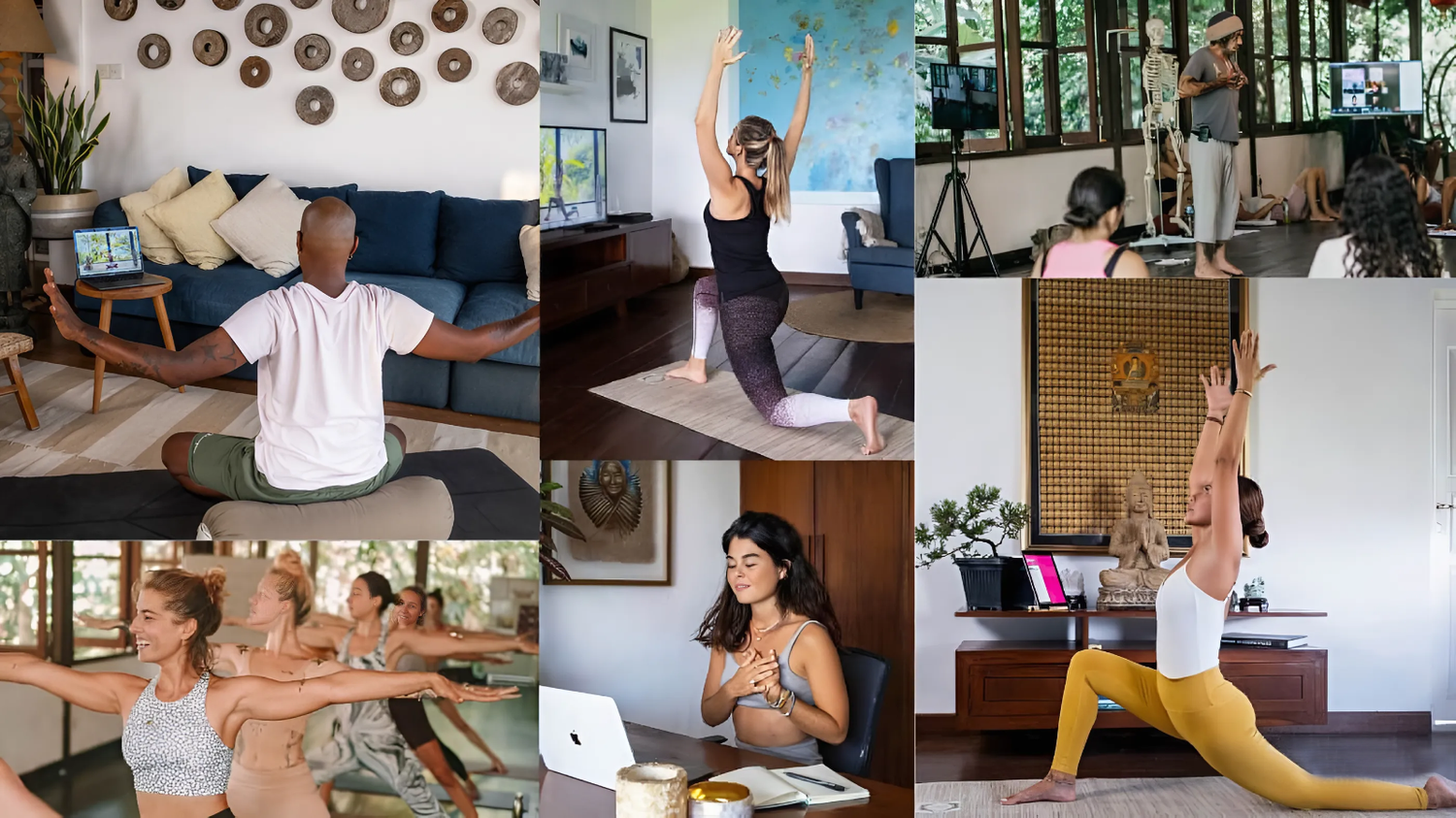
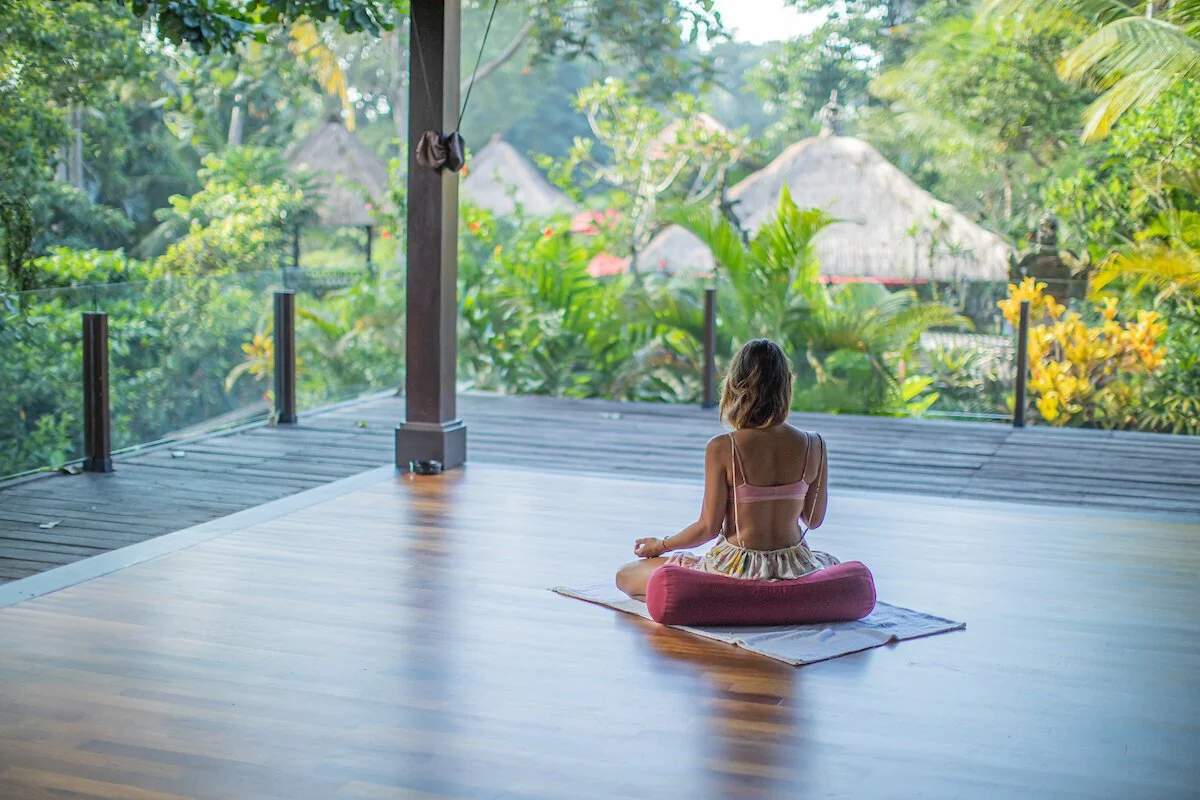
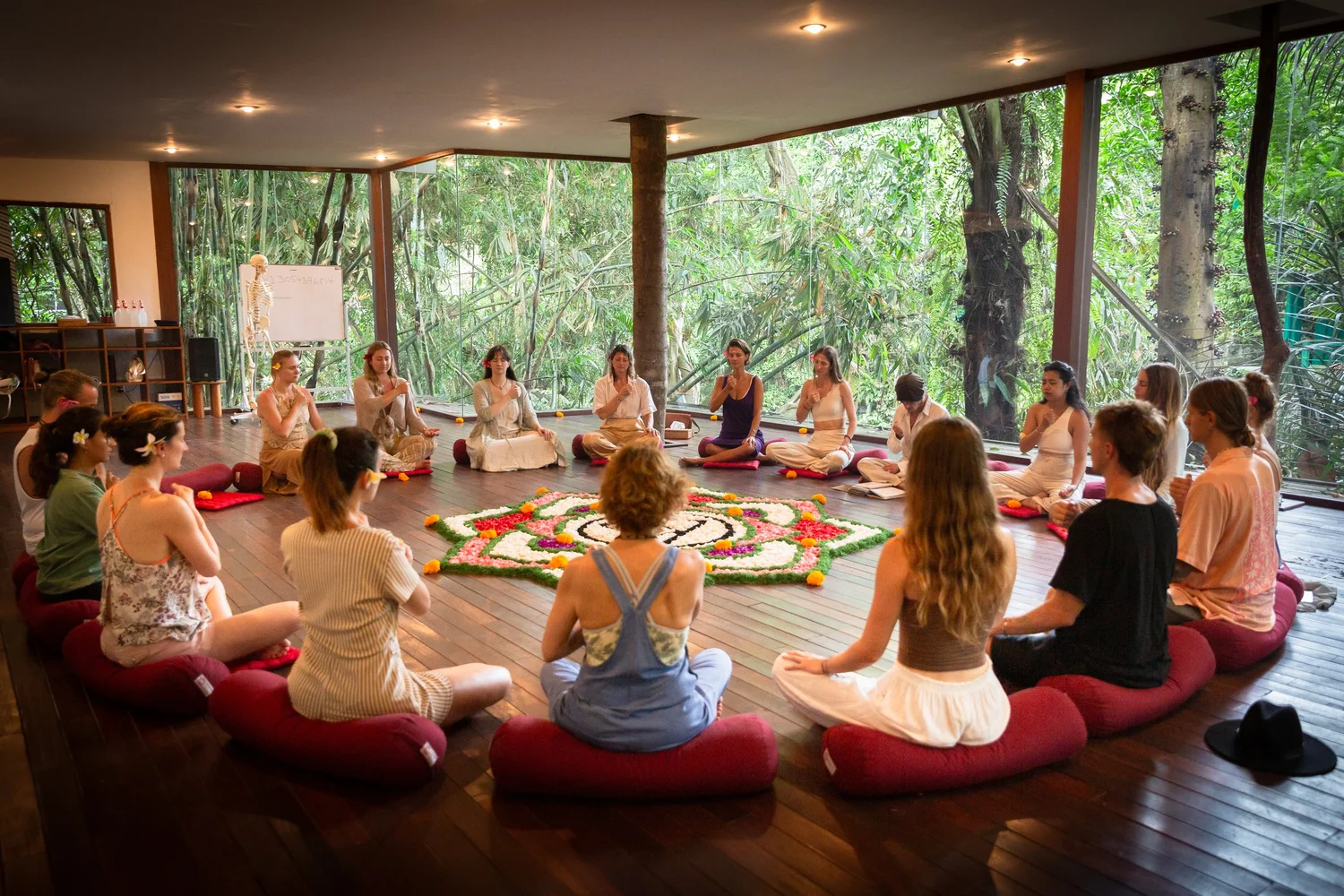
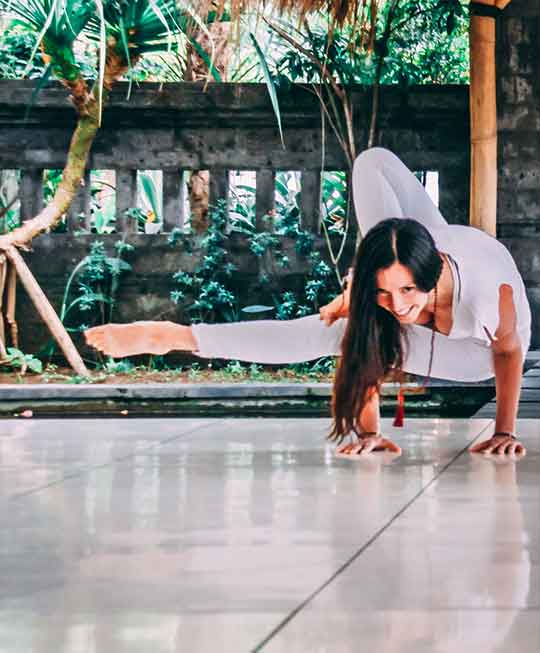
Radiantly Alive is based in central Ubud and is one of the most flow-focused training schools on the island. Founded by Daniel Aaron in 2012, the school’s training is built around RA Vinyasa, a creative, alignment-aware flow style. Vinyasa is at the centre of the program here, which makes Radiantly Alive a natural first choice for students who want to build strong flow teaching skills.
The training usually includes daily flow practice, pranayama, meditation, teaching methodology, philosophy, public speaking, and plenty of supervised teaching practice. Yin and Kundalini are also part of the wider schedule, but the main skill you develop is how to sequence and lead a creative Vinyasa class. This makes it a strong option if you want to graduate feeling ready to teach, not just hold a certificate.
The location also adds to the experience. You are in Ubud, close to cafes, studios, and a wider yoga community. The atmosphere is active, modern, and student-focused rather than slow or retreat-like.
Best for students who plan to teach Vinyasa after graduation and want strong practicum, useful feedback, and confidence in front of a class.
Think twice if you mainly want a slow retreat or a training focused heavily on meditation and spiritual study. Radiantly Alive is structured, practical, and teaching-led, and the pace is part of the experience.
View Full Profile on YTTinBali →
The Yoga Barn in Ubud
Verified by Students
Rating aggregated from publicly available third-party review data. YTTinBali does not host user reviews directly.
Upcoming Intakes
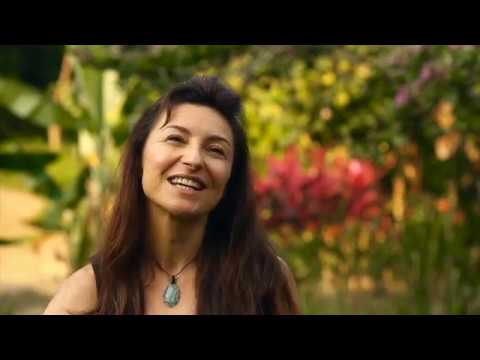
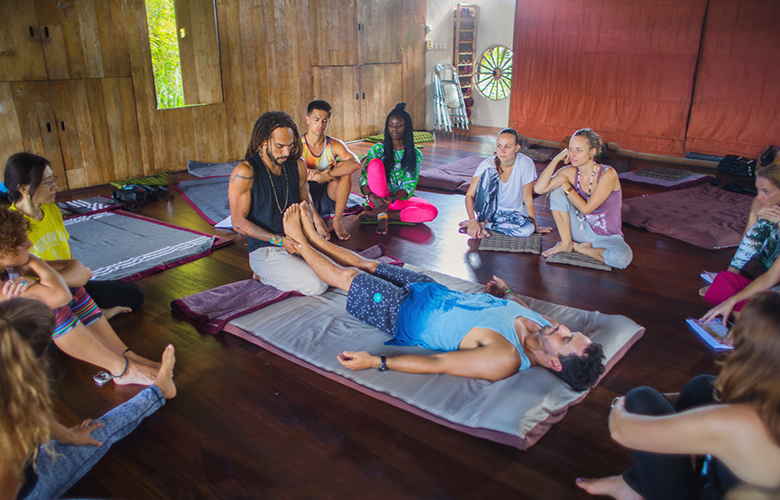
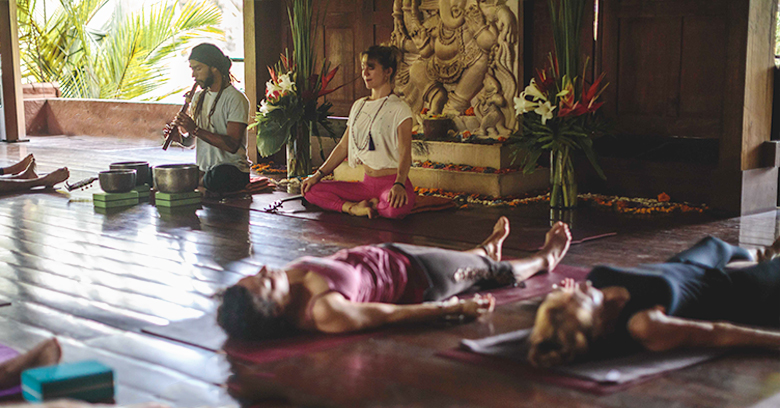
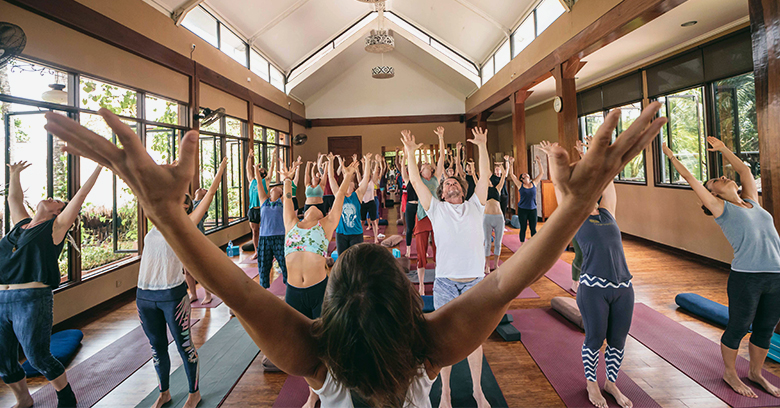
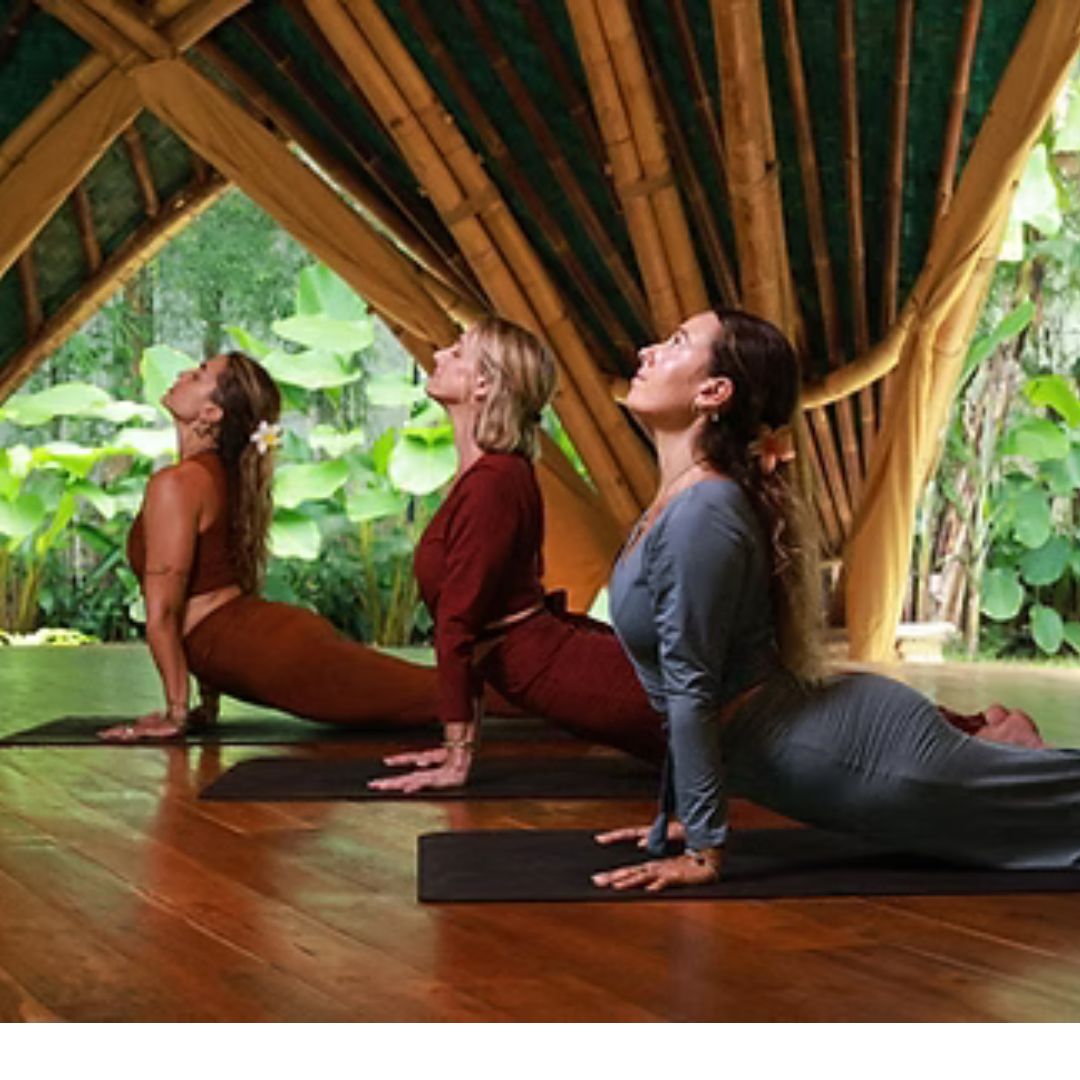
The Yoga Barn is one of the best-known yoga centres in Bali. It opened in Ubud in 2007 and has grown into a large yoga and wellness campus with open-air studios, a healing centre, a cafe, accommodation, daily classes, workshops, and teacher trainings.
This is a good choice if you want variety. Vinyasa is part of the schedule, but it sits alongside many other styles, including Hatha, Yin, Kundalini, Restorative, meditation, breathwork, and philosophy. If you want to understand how flow fits into the wider yoga world, rather than study flow alone, this breadth is the main appeal.
The Yoga Barn also gives you the classic Ubud yoga experience. You are close to cafes, temples, rice fields, and a large international yoga community. The environment is active and social, not quiet or private.
Best for students who want a famous Bali yoga centre with many teachers and styles, where Vinyasa is one strong option among several.
Think twice if you want a small, quiet, highly personal training or a course focused tightly on flow. The Yoga Barn is busy and broad, and it can feel more like a yoga village than a small retreat.
View Full Profile on YTTinBali →
All Yoga Training on Nusa Lembongan
Verified by Students
Rating aggregated from publicly available third-party review data. YTTinBali does not host user reviews directly.
Upcoming Intakes
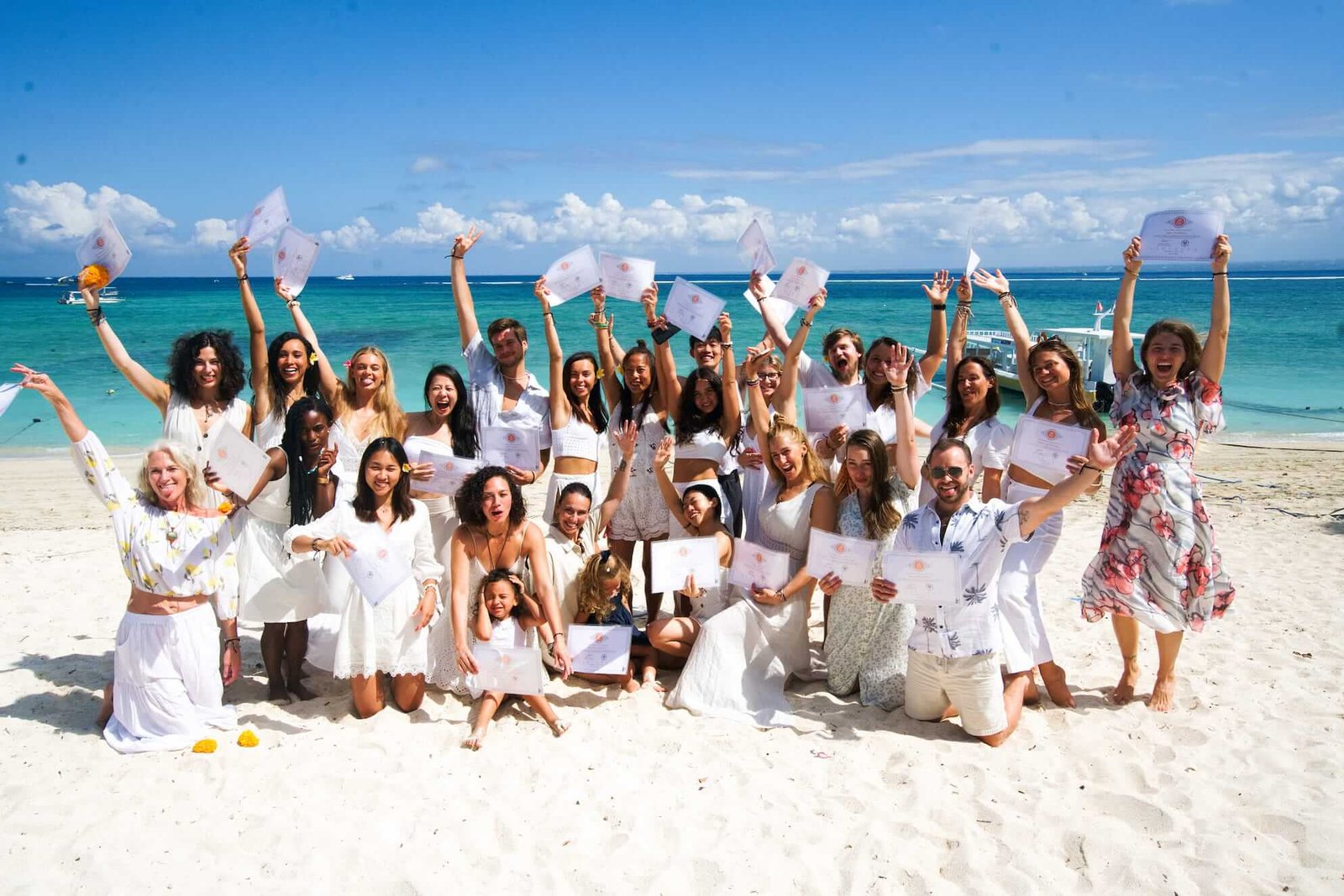
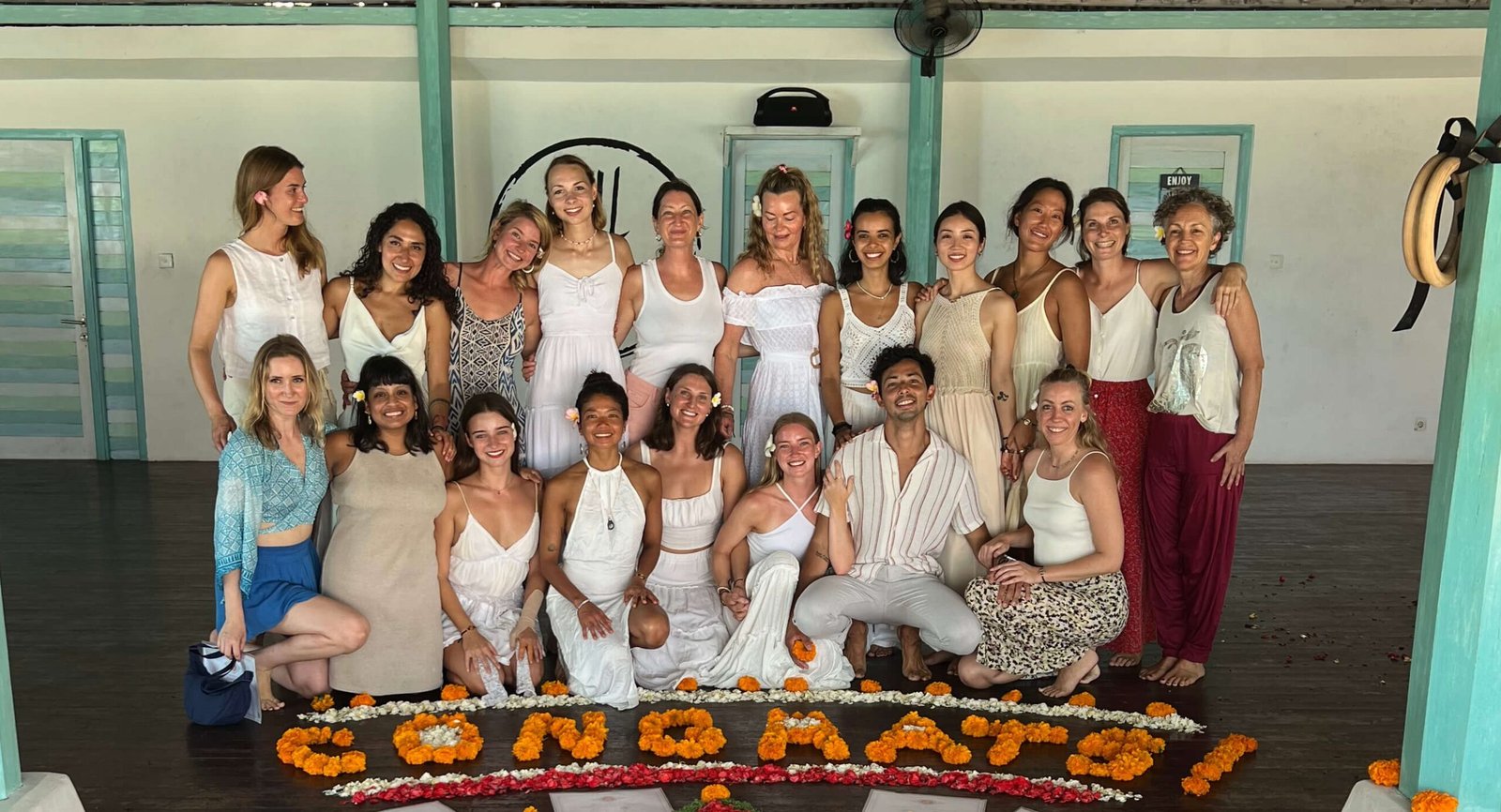
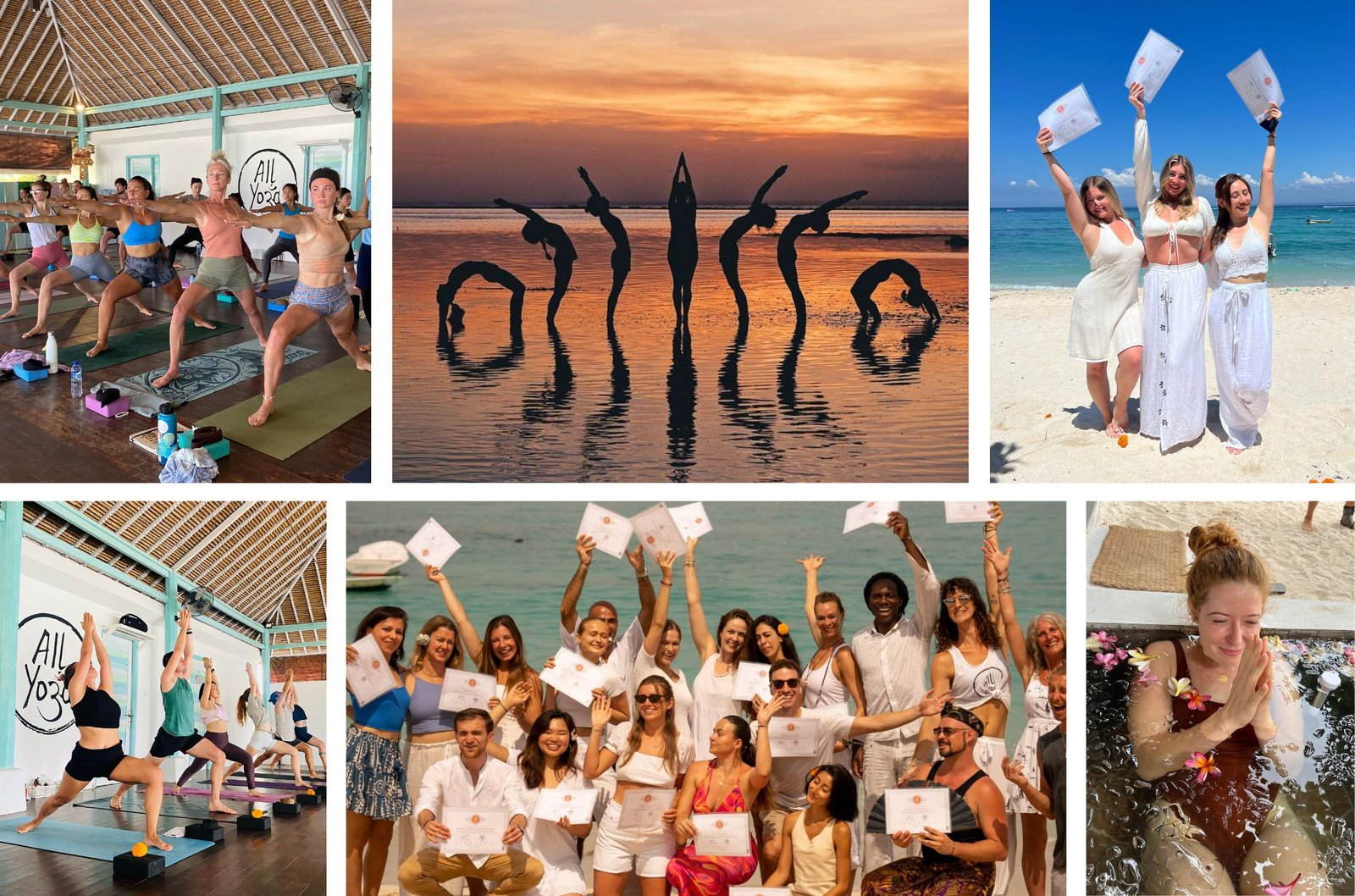
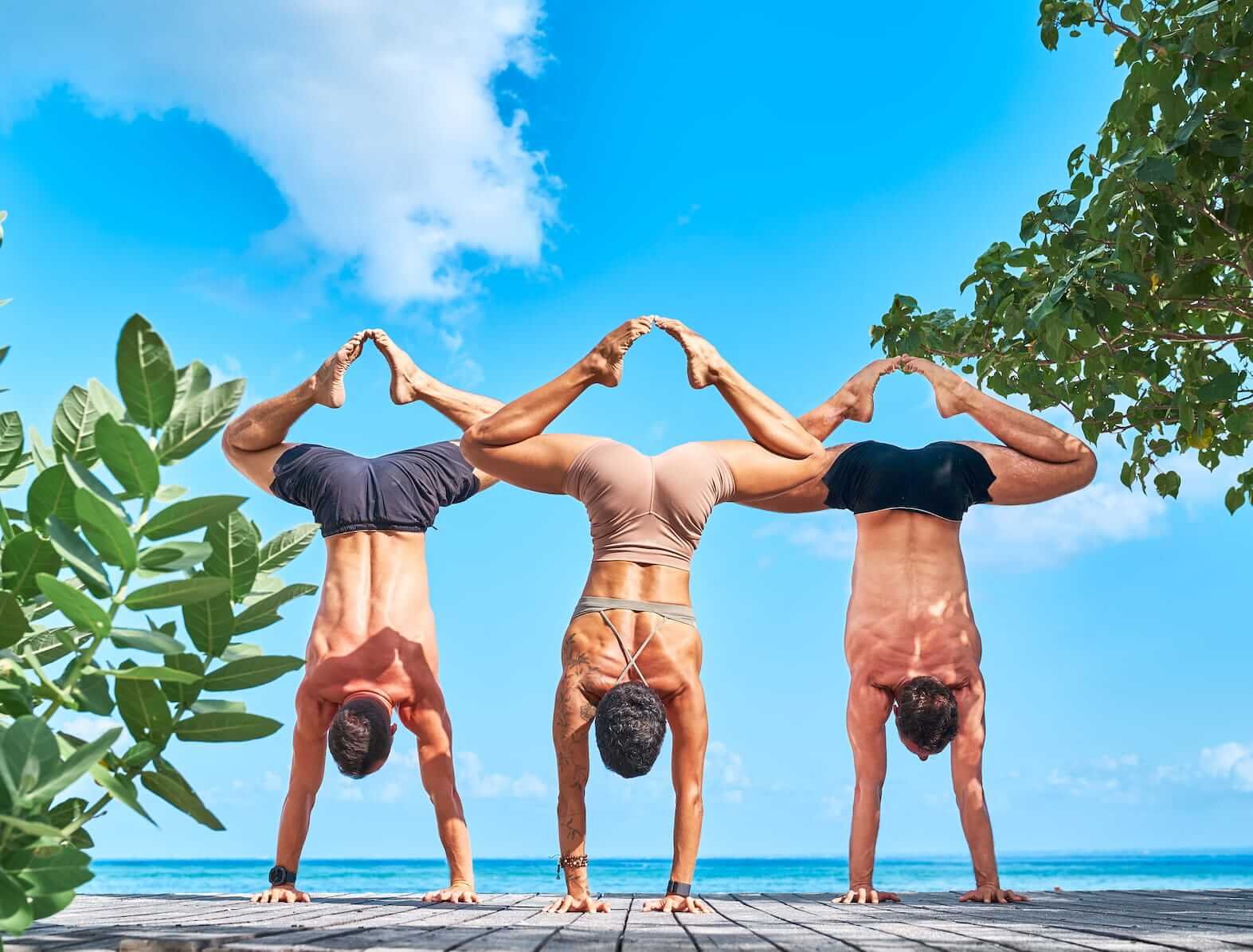
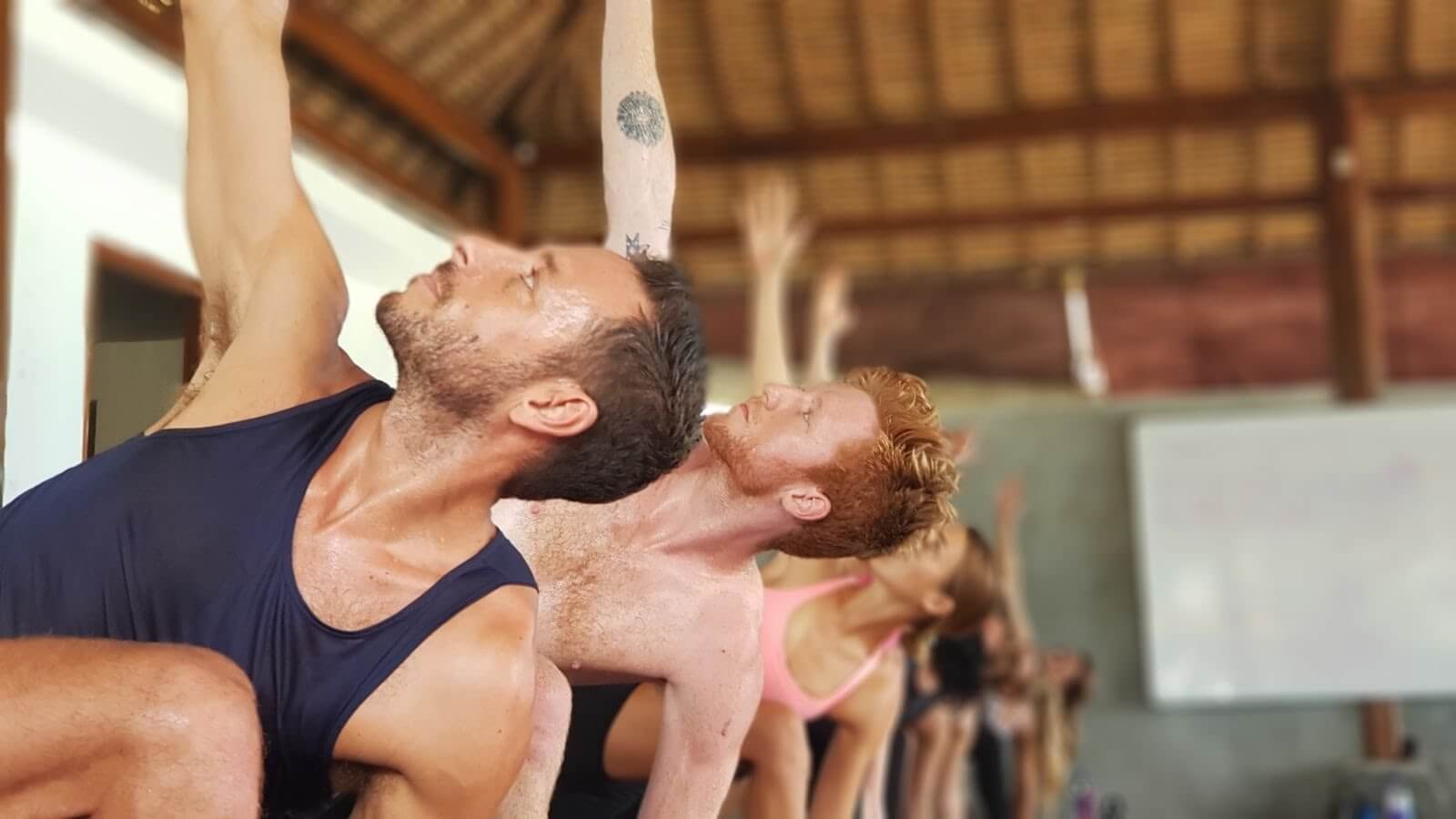
All Yoga Training is one of the longest-running schools on this list. It has been training yoga teachers since 2009 and is built on a strong Ashtanga Vinyasa foundation, with Rocket, Vinyasa, and Yin elements added depending on the program. Because Vinyasa developed from Ashtanga, this gives students a structured base for understanding flow, sequencing, and breath-led movement.
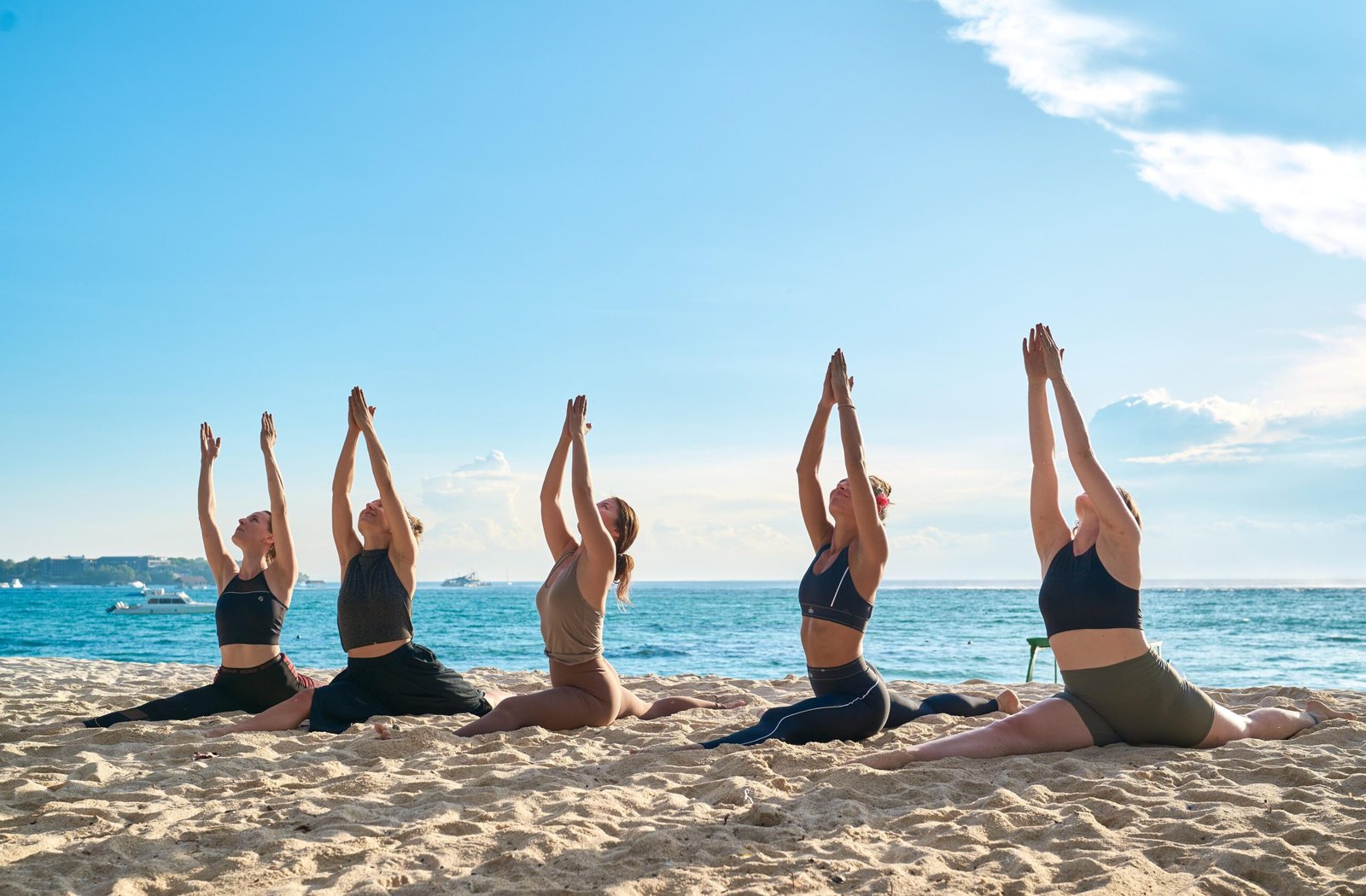
The setting is one of the school’s biggest strengths. Instead of Ubud or Canggu, the training takes place on Nusa Lembongan, a smaller island off Bali. The beachfront shala creates a calmer, more focused environment than the busier mainland areas, and group sizes are capped to keep teaching practice more personal.
This is a good option if you want a serious, practice-based training by the sea. It feels less like a social Bali trip and more like a focused training block.
Best for students who want a structured Ashtanga Vinyasa foundation for their flow teaching in a quiet island setting.
Think twice if you want lots of cafes, shops, and activities nearby. Nusa Lembongan is quieter and more limited than Ubud or Canggu.
View Full Profile on YTTinBali →
House of Om in Ubud
Verified by Students
Rating aggregated from publicly available third-party review data. YTTinBali does not host user reviews directly.
Upcoming Intakes
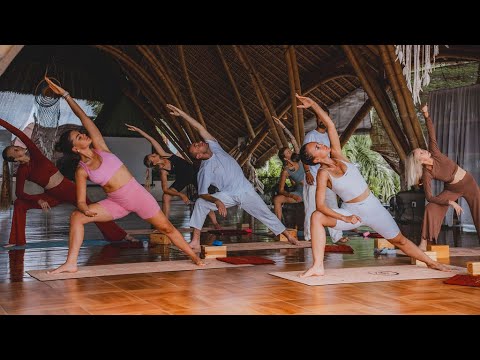
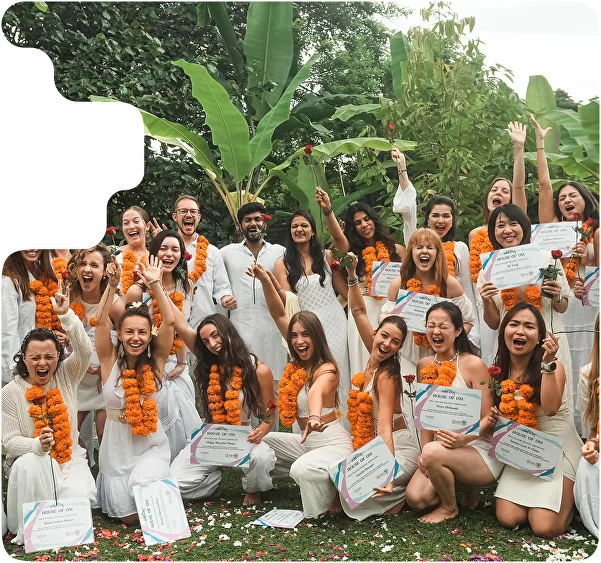
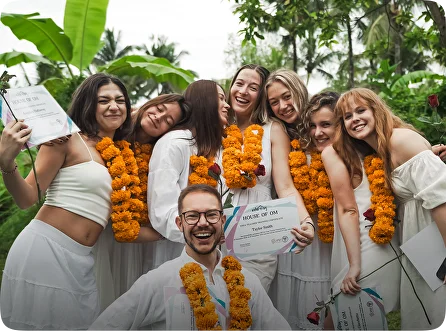
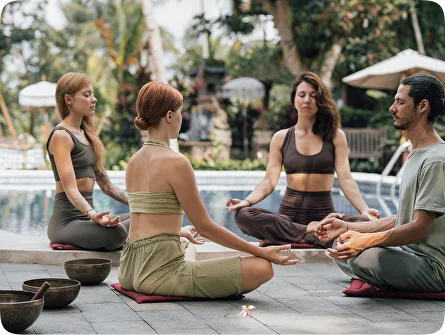
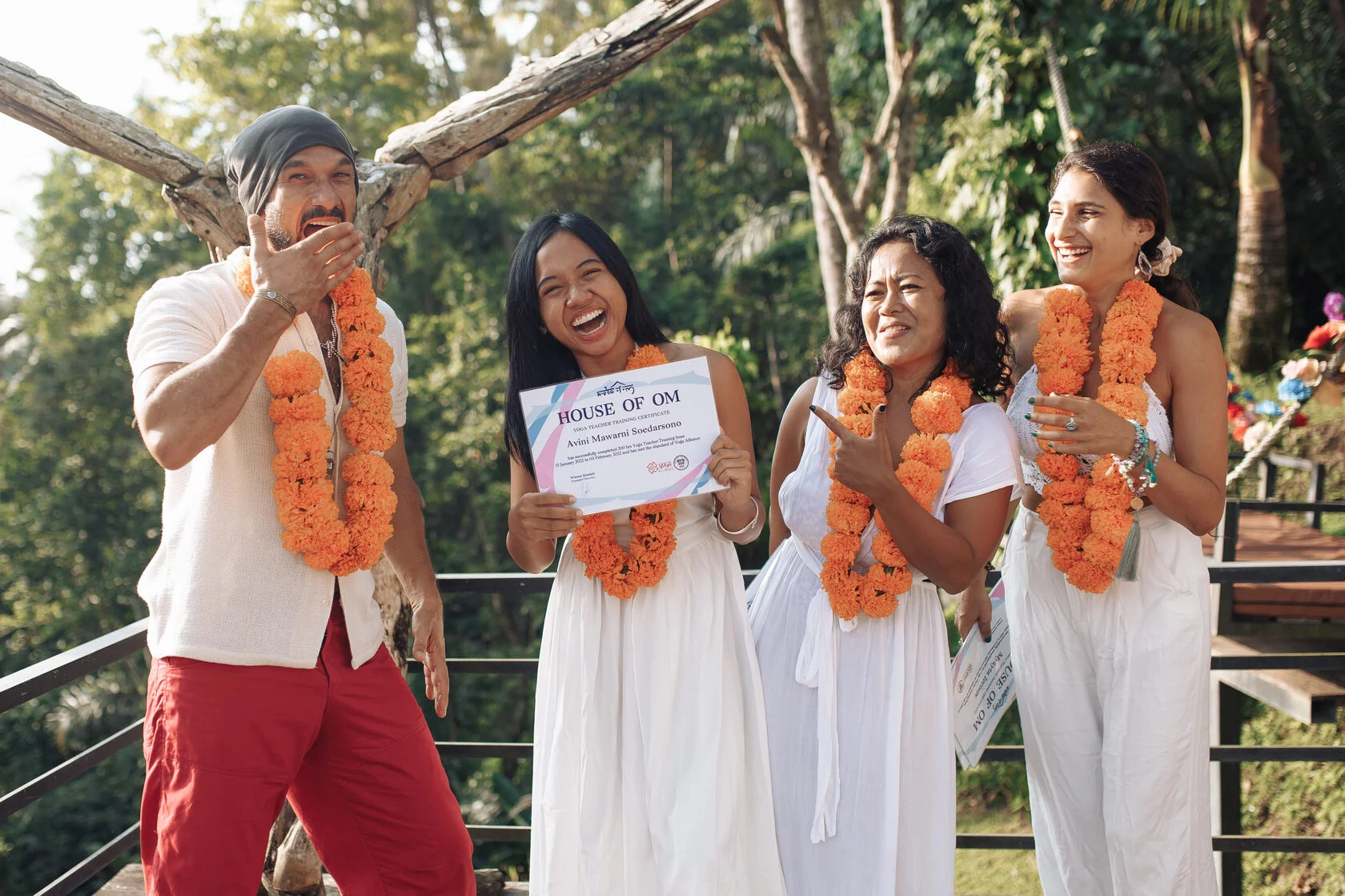
House of Om is one of the most popular choices for students who want a complete Bali yoga teacher training package. The school offers training, accommodation, meals, and community in one place, which makes the experience easier for first-time visitors.
The training is multi-style and usually covers Hatha, Vinyasa, Ashtanga, meditation, philosophy, anatomy, and teaching methodology. Vinyasa is a core part of the daily practice, so you build a flowing teaching style while still getting a rounded foundation in Hatha and Ashtanga. This blend suits students who want flow without specialising too early.
The biggest strength here is convenience and community. Many students choose House of Om because they want everything organised for them, including the room, meals, schedule, classmates, and training environment.
Best for students who want an all-inclusive training where Vinyasa sits alongside Hatha and Ashtanga, with accommodation, meals, and community included.
Think twice if you want a very small group or a highly personalised training. House of Om is known more for its social, community-based experience.
View Full Profile on YTTinBali →
Vinyasa Yogashala in Ubud
Verified by Students
Rating aggregated from publicly available third-party review data. YTTinBali does not host user reviews directly.
Upcoming Intakes
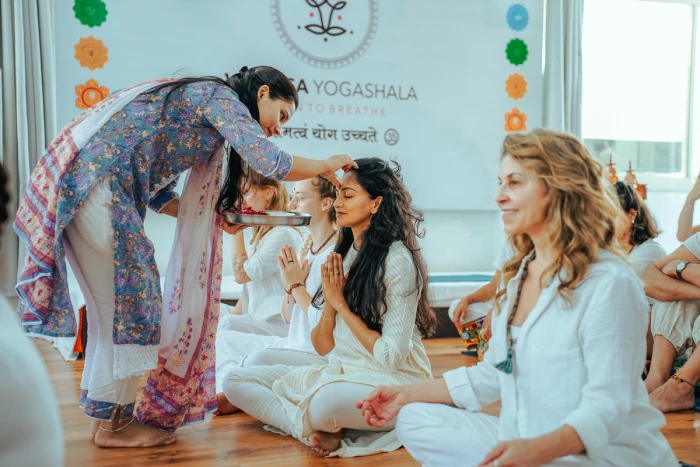
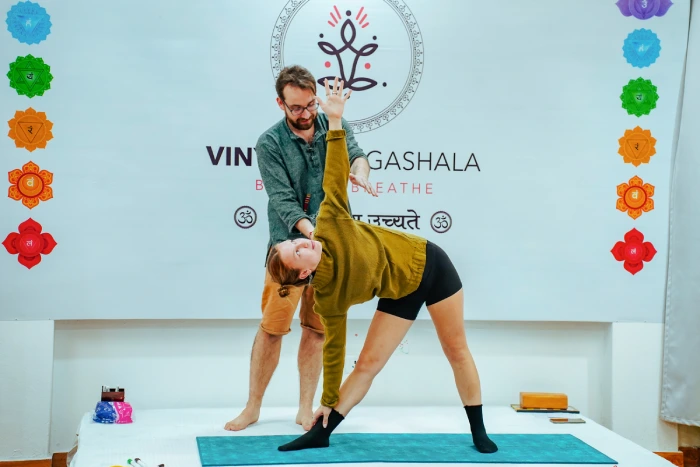
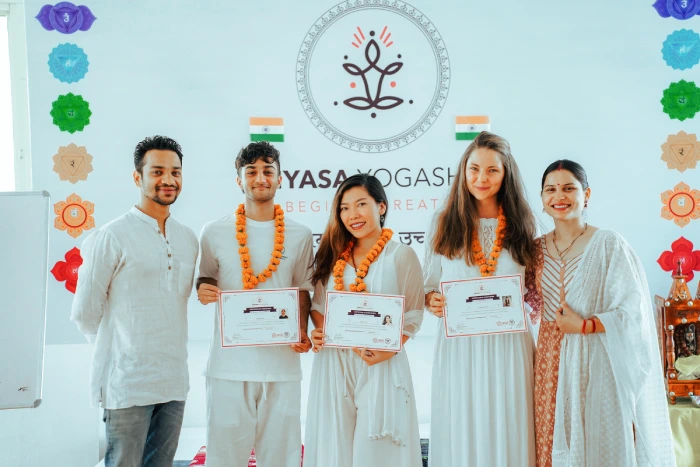
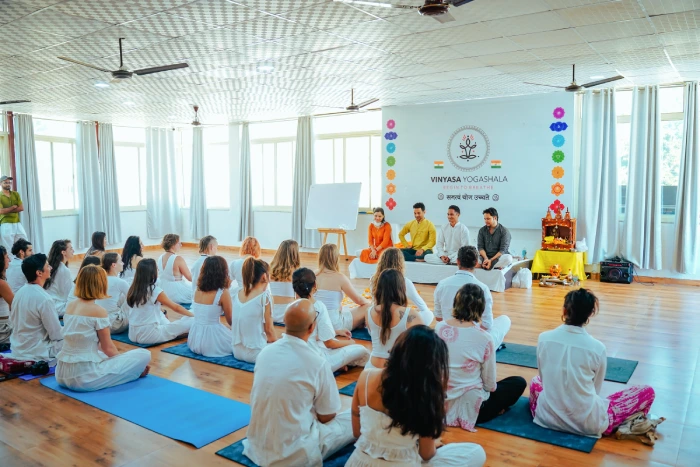
As the name suggests, flow is at the heart of this Ubud school. Vinyasa Yogashala runs an affordable, Vinyasa-focused training with small class sizes, which means students can receive more personal attention from teachers. Programs range from a basic 100-hour course to advanced 500-hour study, so you can choose the level that fits your goal.
The curriculum blends Vinyasa Flow with Hatha foundations and a basic Ashtanga structure, along with pranayama, meditation, Sanskrit, and yoga philosophy. This gives students a classic flow foundation: Hatha for alignment, Ashtanga for structure, and creative Vinyasa on top. You learn to teach flowing classes with more than just posture knowledge behind them.
The school is based in calm surroundings in Ubud, and the lower price point makes it a practical choice for students who want quality training without a premium resort-style budget.
Best for students who want an affordable, genuinely flow-focused course in Ubud with small classes and strong philosophical grounding.
Think twice if you want resort-style luxury or a heavy focus on restorative and therapeutic yoga. The strength here is core flow, not premium comfort.
View Full Profile on YTTinBali →
Alchemy Yoga & Meditation Center in Ubud
Verified by Students
Rating aggregated from publicly available third-party review data. YTTinBali does not host user reviews directly.
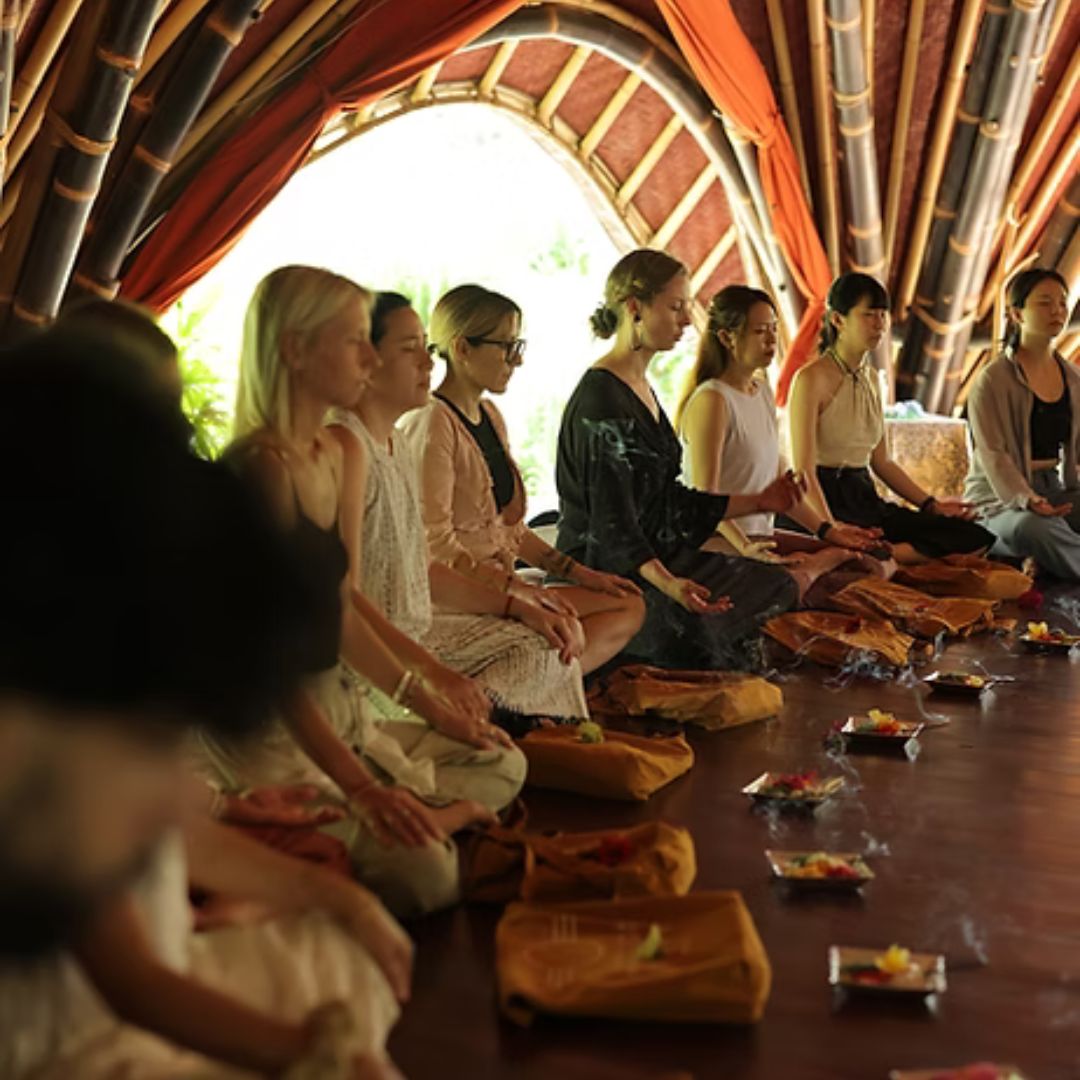
Alchemy Yoga & Meditation Center is based in Penestanan, close to Ubud, and offers a more philosophy-led training than most flow-first programs. The school teaches Hatha and Vinyasa alongside traditional Tantra, meditation, and teachings connected to the non-dual Trika lineage.
Here, you learn to teach flowing Vinyasa while also spending meaningful time with philosophy, meditation, and inner work. It is a good fit if you want flow grounded in tradition rather than flow taught mainly as fitness.
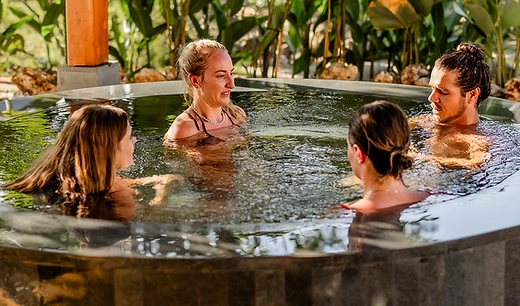
The school is also connected to the wider Alchemy community in Ubud, including plant-based food and wellness spaces nearby.
Best for students who want to teach Vinyasa but care just as much about meditation, Tantra, philosophy, and the deeper side of yoga.
Think twice if you want a flow-first or fitness-focused training. Vinyasa is one part of a wider, more contemplative program here.
View Full Profile on YTTinBali →
Ulu Yoga in Uluwatu
Verified by Students
Rating aggregated from publicly available third-party review data. YTTinBali does not host user reviews directly.
Upcoming Intakes
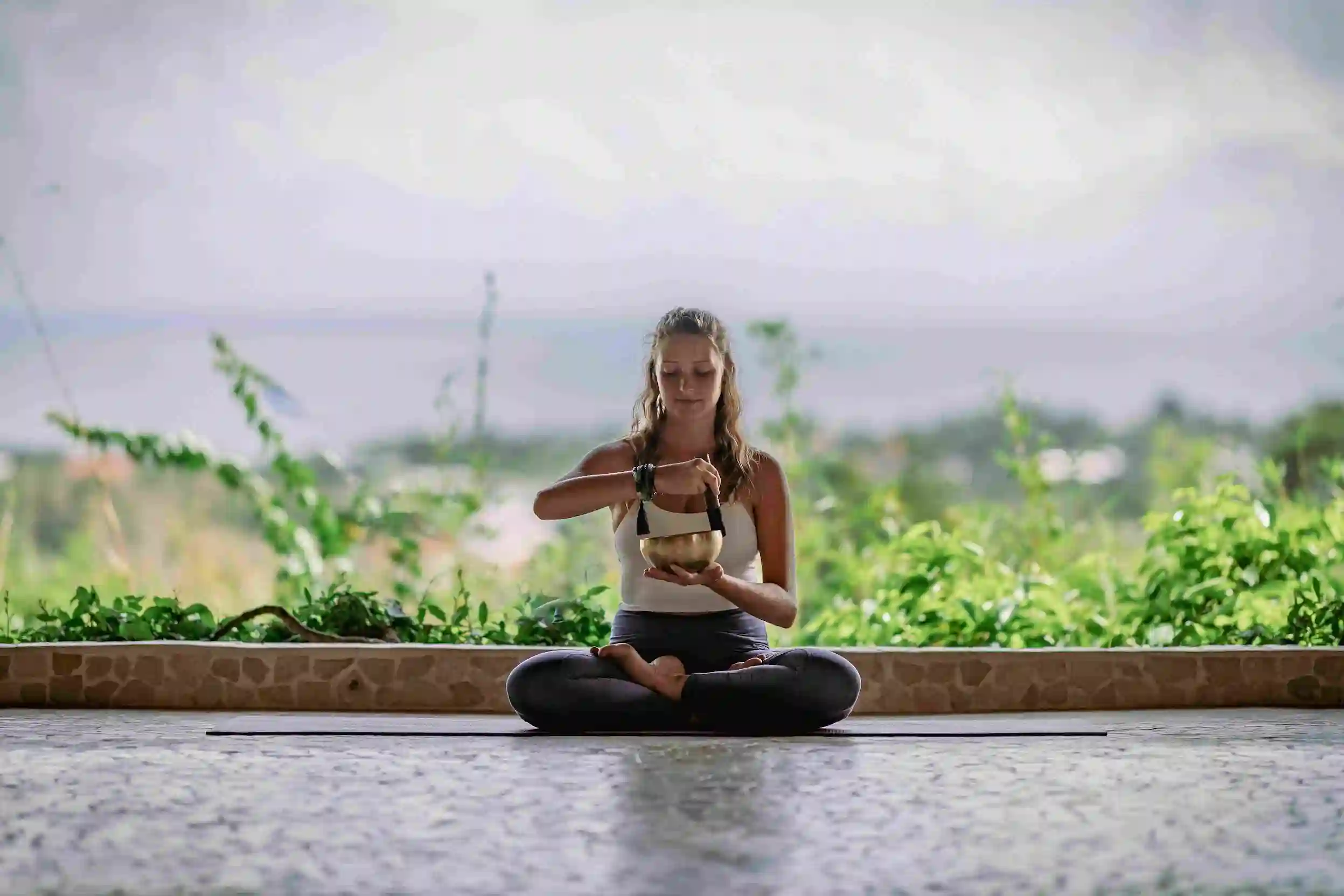
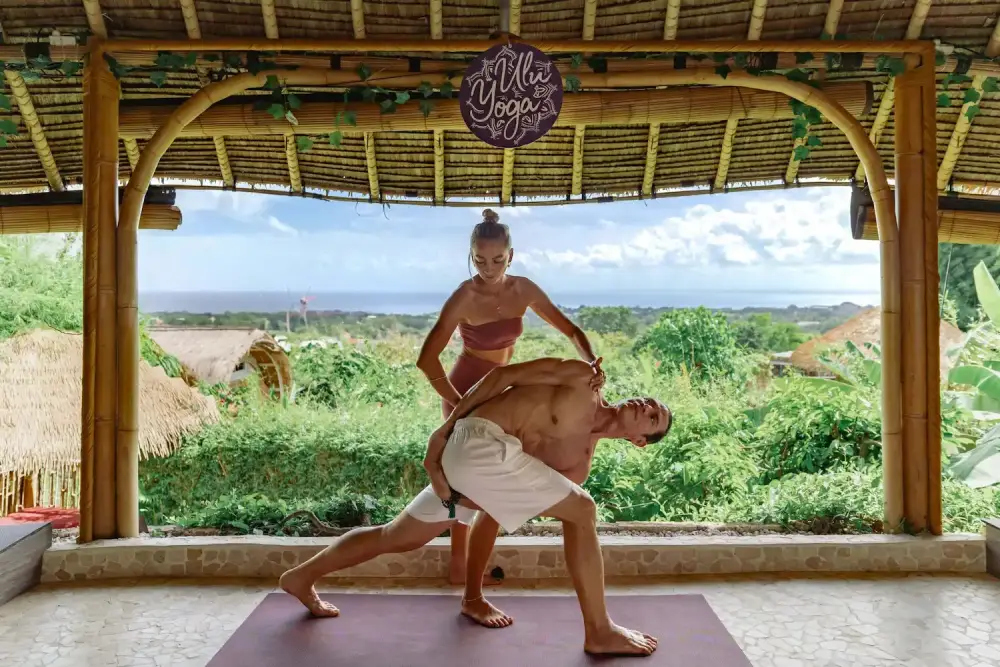
Ulu Yoga is based near Bingin Beach in Uluwatu and offers a more playful, beachside style of training. The location is a big part of the appeal, with ocean views, surf beaches, cliffs, and a calmer feel than Canggu.
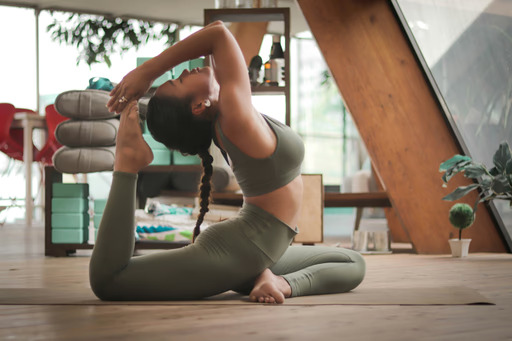
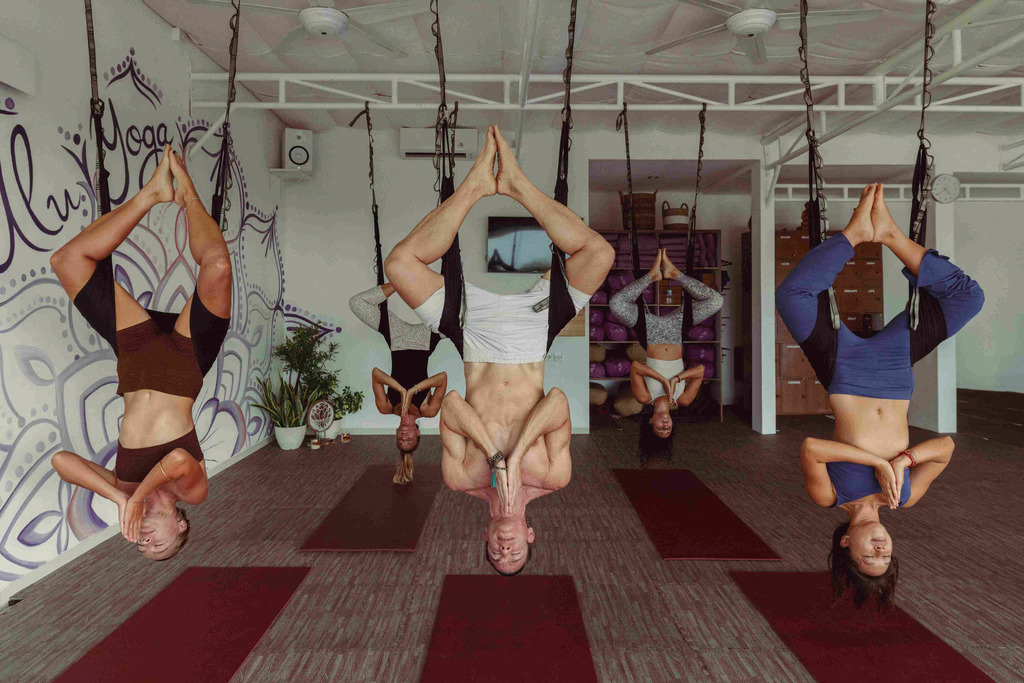
Vinyasa is the core flow style here, taught alongside Hatha, Yin, aerial yoga, acro yoga, anatomy, philosophy, teaching methodology, and daily teaching practice. The mix is wider than most programs, so you build a solid flow base while also exploring more creative and playful forms of movement. It suits students who want flow plus variety.
This school works well for people who want to study seriously but still enjoy a fun Bali experience near the ocean.
Best for students who want a dynamic, beachside flow training with extra variety, including aerial and acro yoga.
Think twice if you want a focused, traditional training in one style from start to finish. Ulu Yoga is built around variety.
View Full Profile on YTTinBali →
Joga Yoga Training in Canggu
Verified by Students
Rating aggregated from publicly available third-party review data. YTTinBali does not host user reviews directly.
Upcoming Intakes
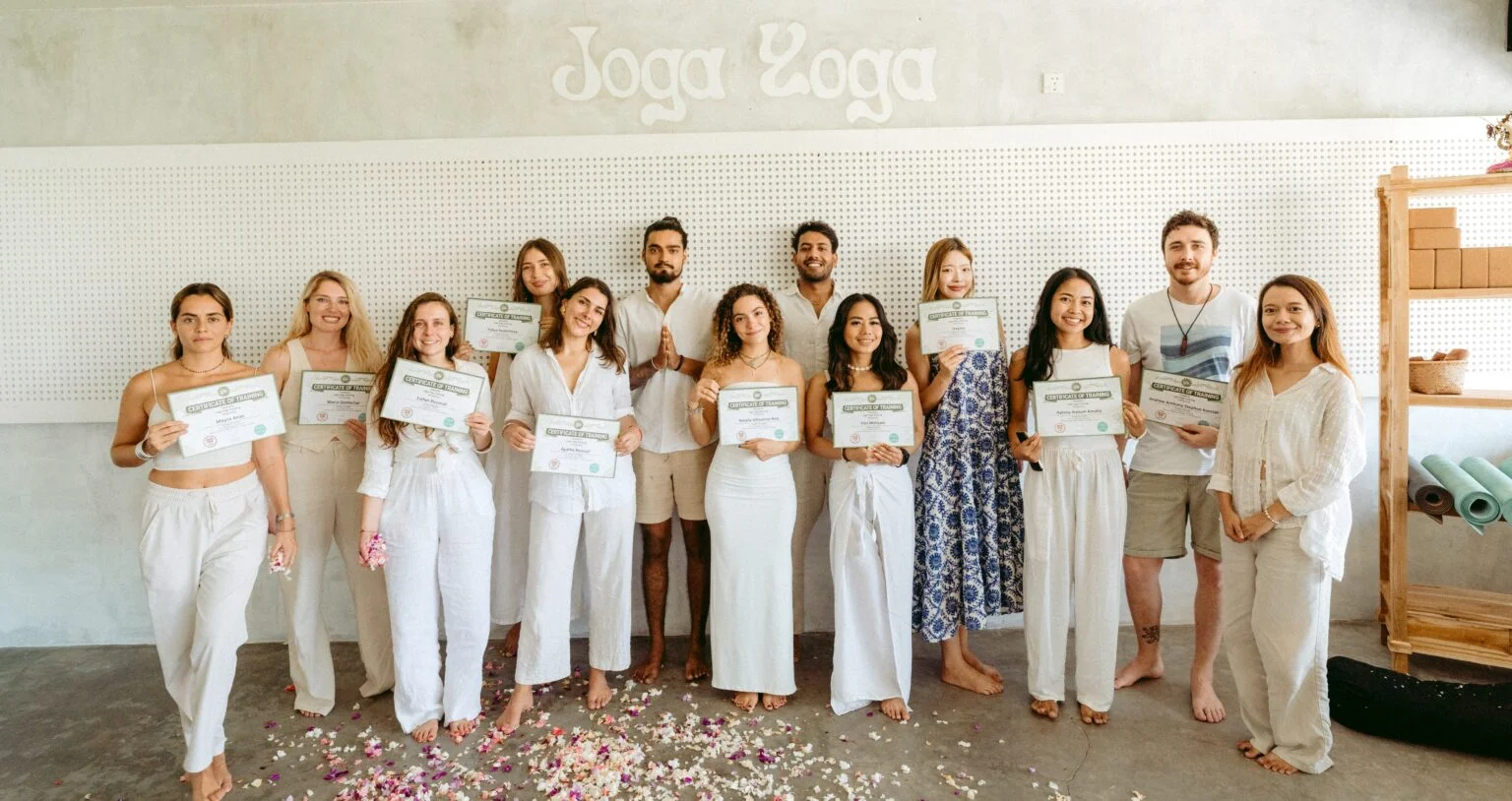
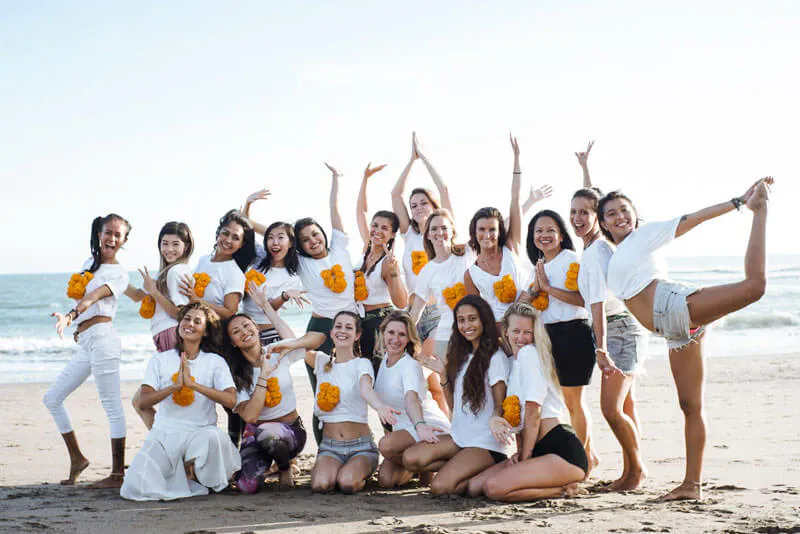
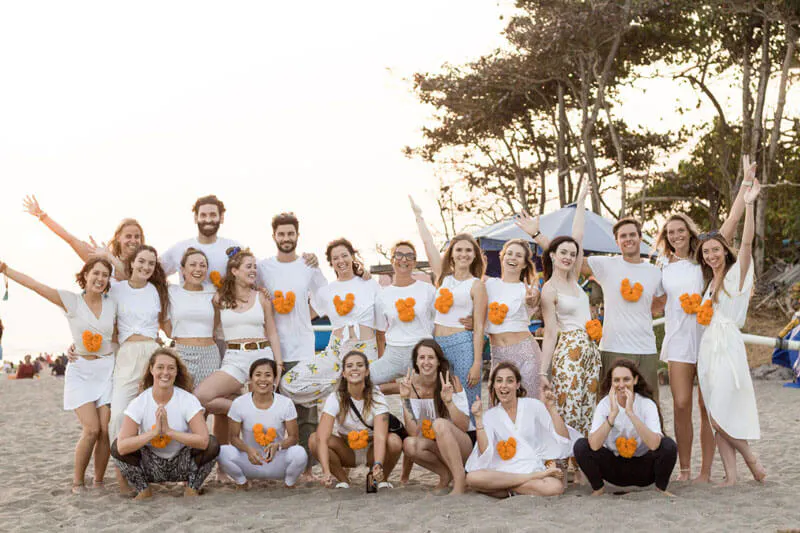
Joga Yoga Training is based in Batu Bolong, Canggu, just a short walk from the beach. It has been training teachers since 2017 and is registered with Yoga Alliance, with 100, 200, and 300-hour programs available. The daily practice is built around Vinyasa flow, which makes it a clear choice for students who want a flowing teaching style in a social beach town.
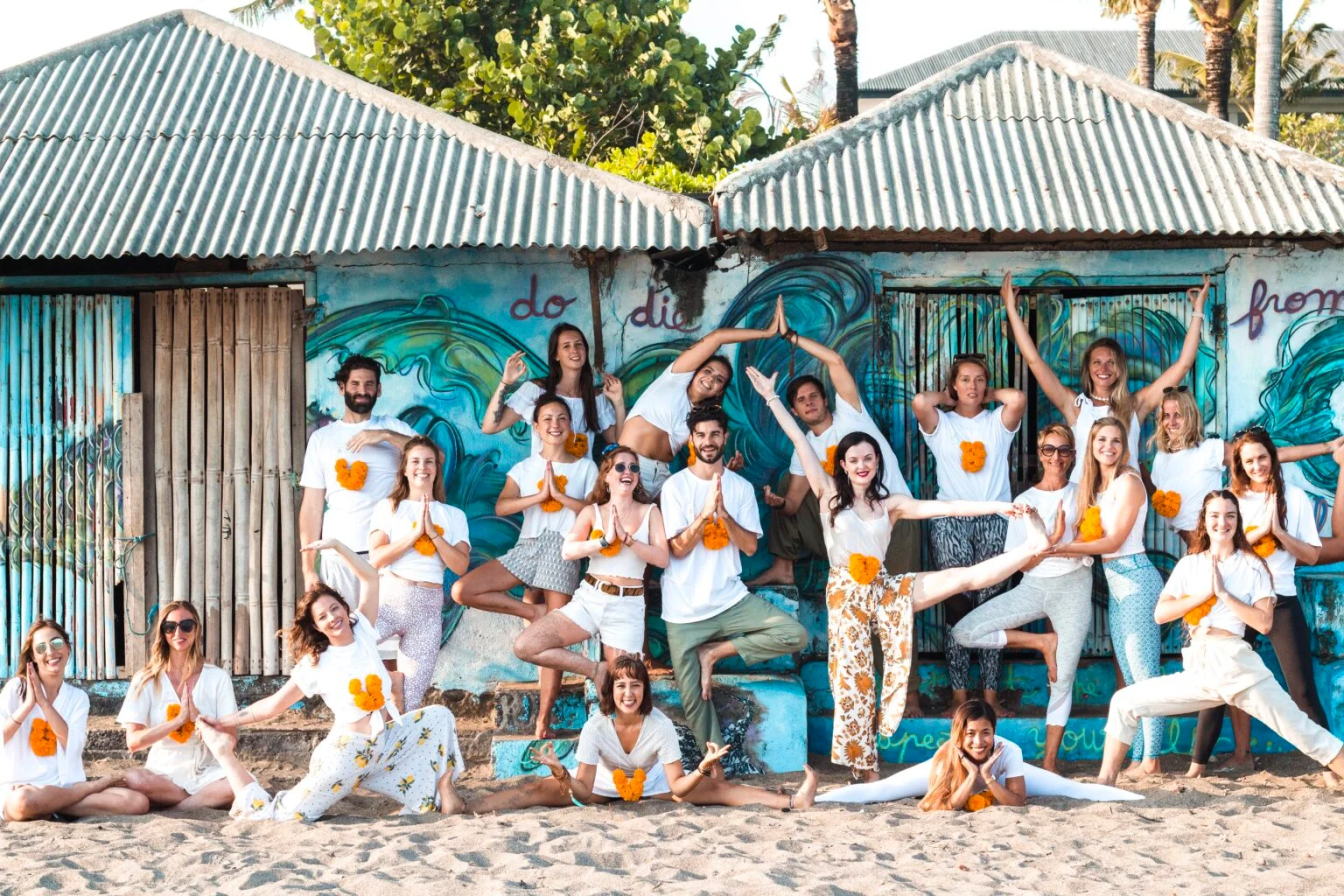
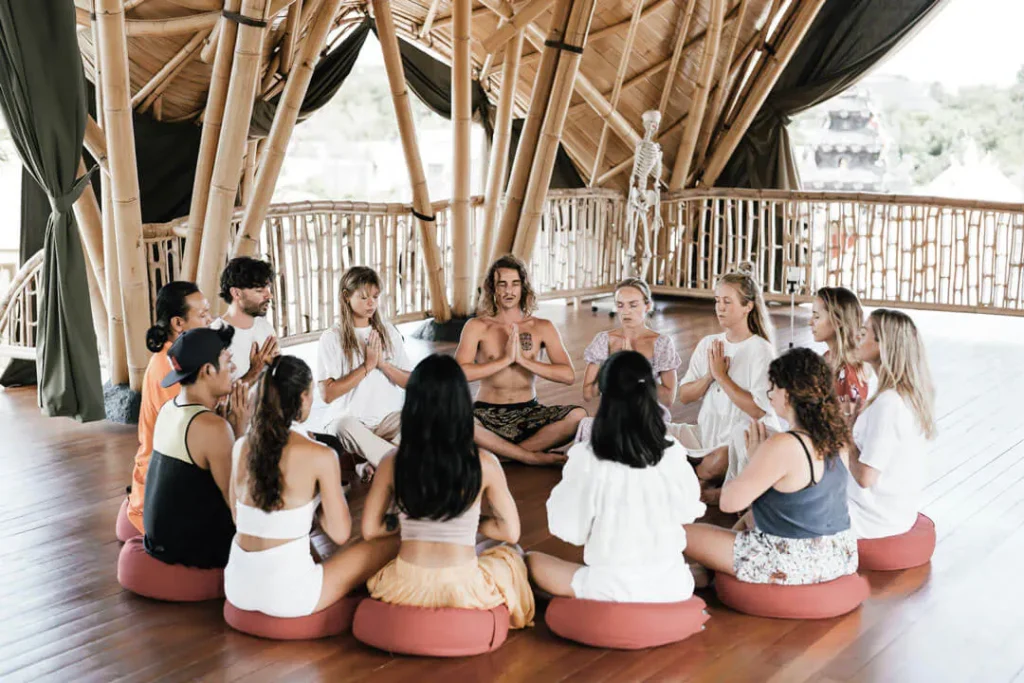
The 200-hour course covers Vinyasa Flow and Hatha, a basic Ashtanga foundation, the principles of Yin and restorative yoga, plus pranayama, meditation, anatomy, and teaching practice. This gives students a balanced flow foundation: alignment, movement, and slower counterbalancing practices in one course. The school is known for being supportive and community-driven, with local and international teachers and a relaxed, friendly feel.
It also has a practical side. Joga Yoga is affordable, often offers payment plans, and allows graduates to practise teaching at the studio to build real experience.
Best for students who want a social, well-supported flow training near the beach in Canggu, with a flexible and affordable setup.
Think twice if you want a remote, quiet, retreat-style training. Canggu is busy and social, which is exactly what some students want and what others may find distracting.
View Full Profile on YTTinBali →
Loka Yoga School in Canggu
Verified by Students
Rating aggregated from publicly available third-party review data. YTTinBali does not host user reviews directly.
Upcoming Intakes
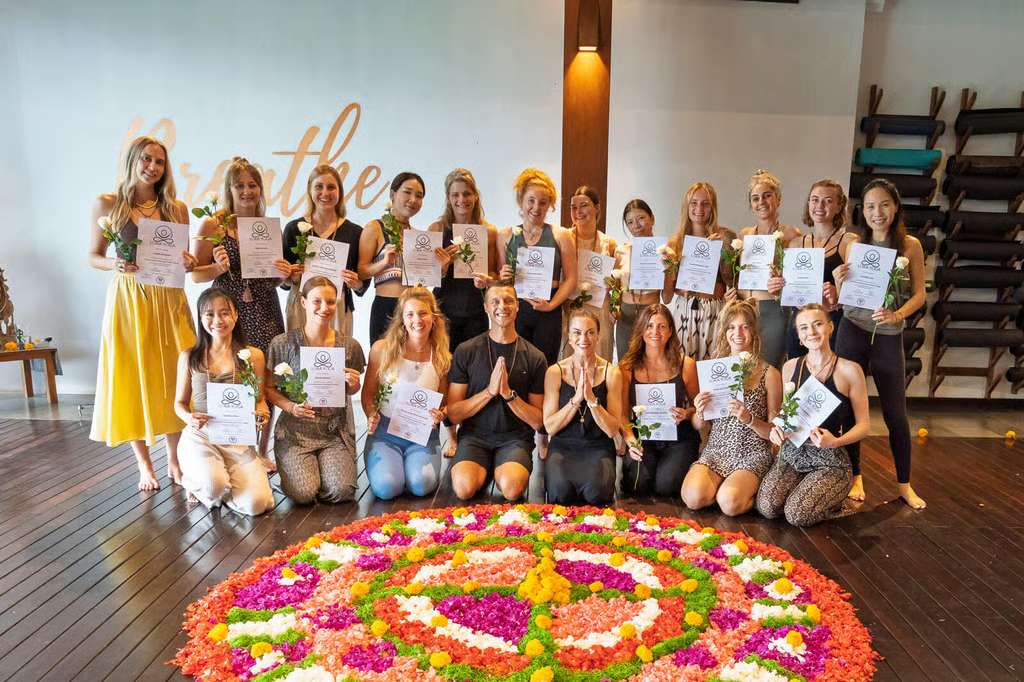
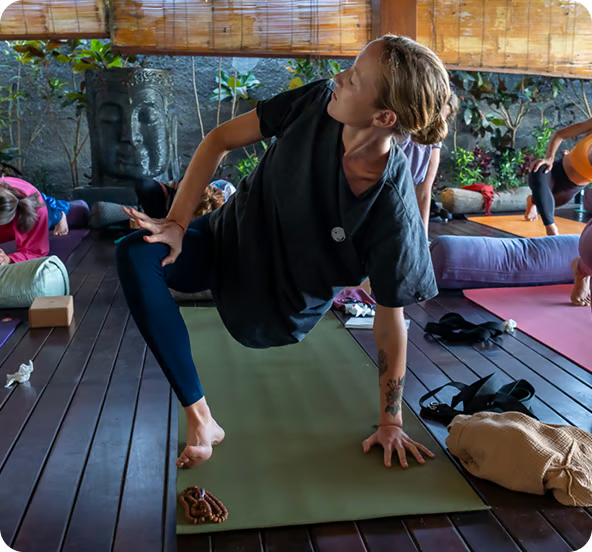
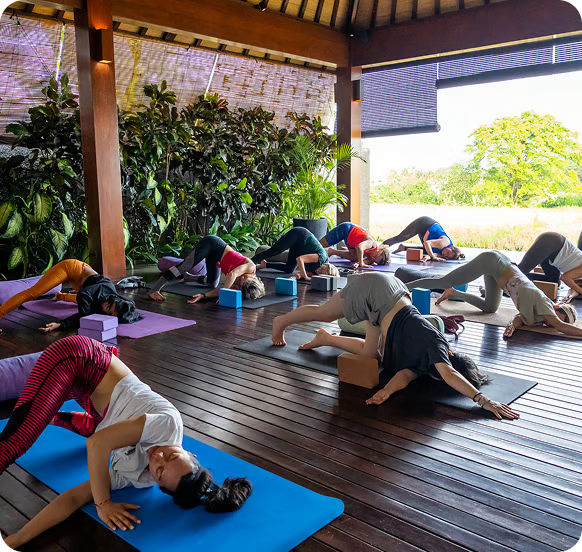
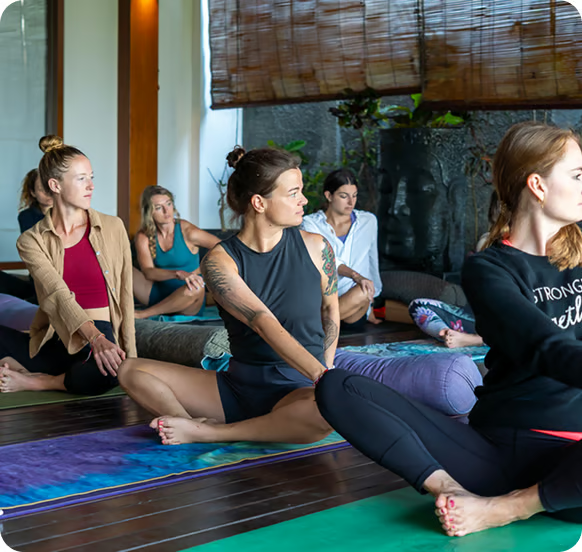
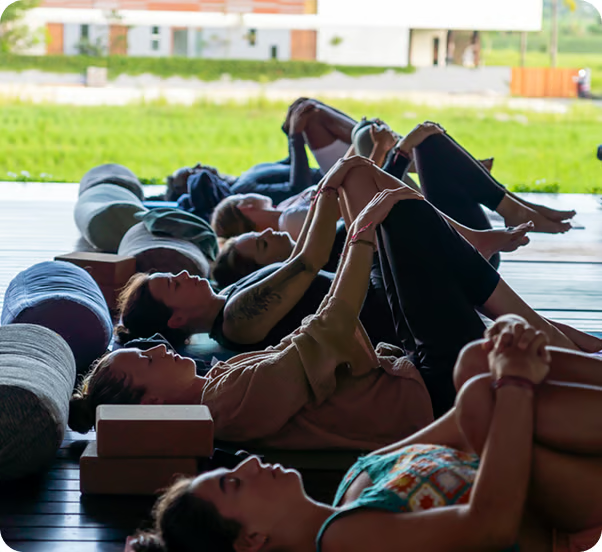
Loka Yoga School is set near Canggu, surrounded by rice paddies and close to one of Bali’s best surf beaches. It is a multi-style school where Vinyasa and Power flow sit alongside Hatha, Yin, and Ashtanga, all framed by its motto, “Science Meets Spirituality.” If you want a flowing practice taught with a modern, methodical approach, this school is a strong fit.
The training gives real weight to teaching methodology and practical experience, supported by experienced teachers with many combined years of practice. Yoga philosophy and biomechanics are part of the program, so you finish with both teaching confidence and a better understanding of how to sequence flow safely.
The setting is calmer than central Canggu. It is a short drive from the busiest streets, which suits students who want focus during training and lifestyle options on rest days.
Best for students who want a multi-style course with a strong flow and teaching-methodology focus, near surf and rice fields.
Think twice if you want to be in the middle of Canggu’s busiest cafes and nightlife. The location is quieter and a little outside the centre.
View Full Profile on YTTinBali →
Yoga New Vision in Ubud
Verified by Students
Rating aggregated from publicly available third-party review data. YTTinBali does not host user reviews directly.
Upcoming Intakes
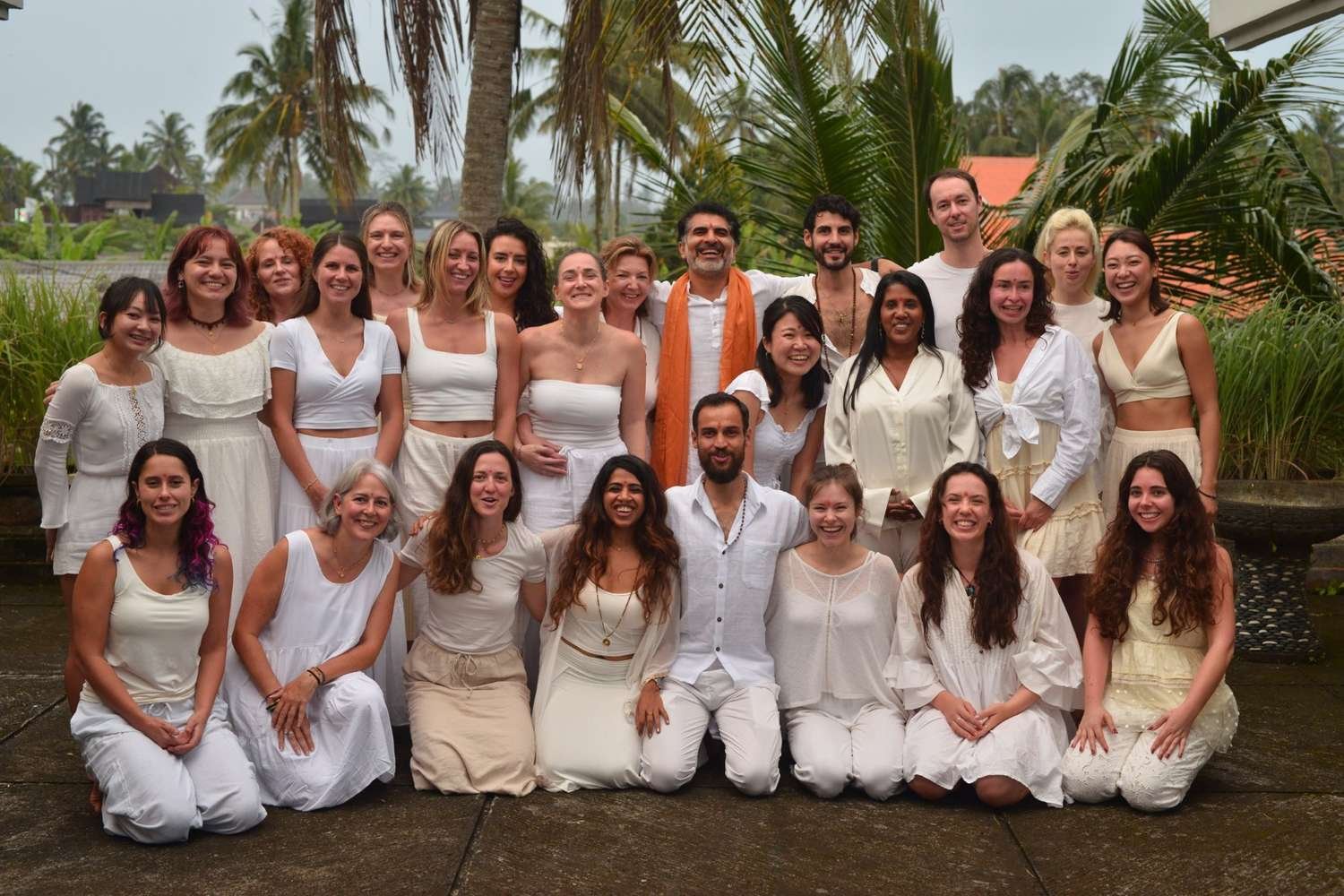
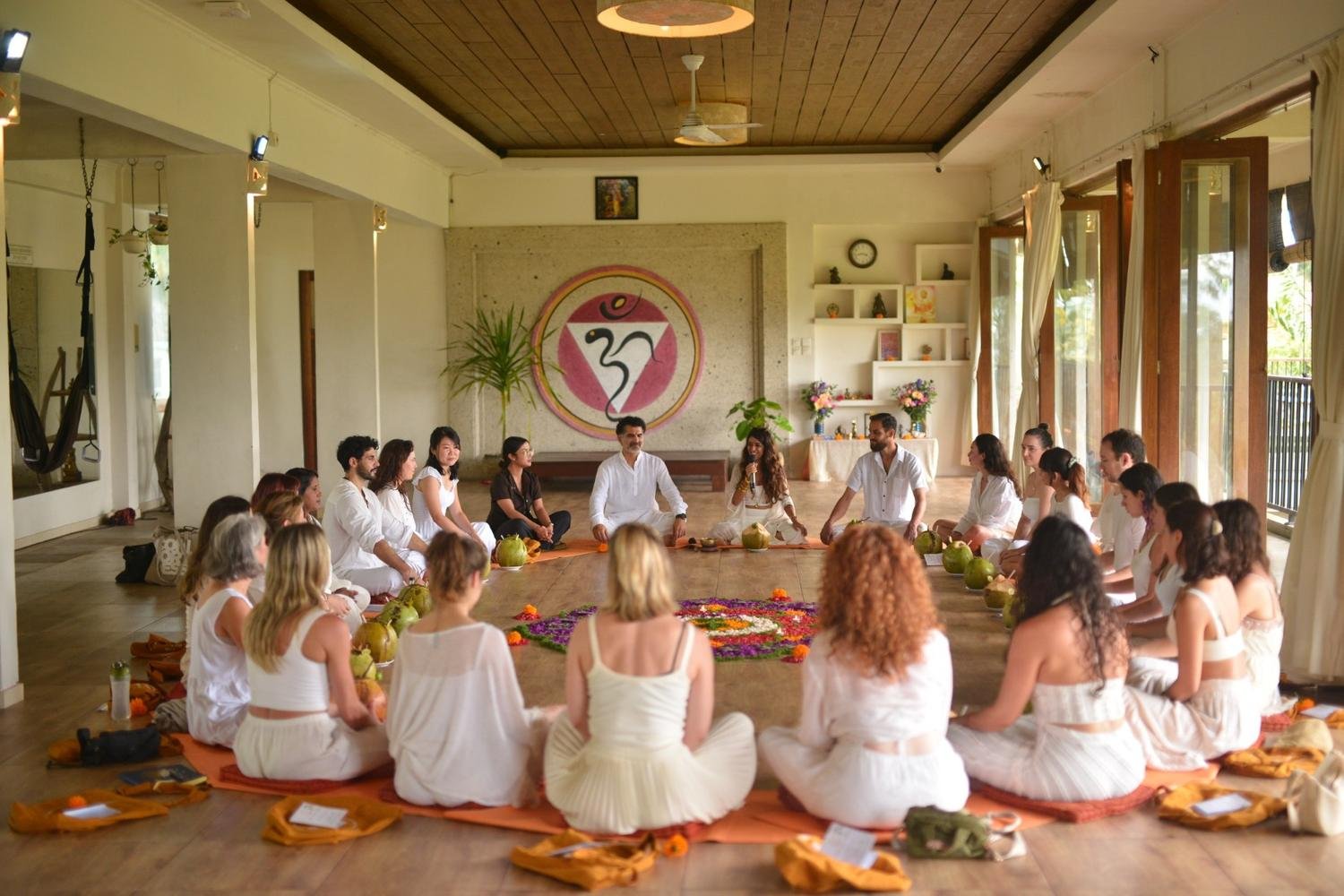
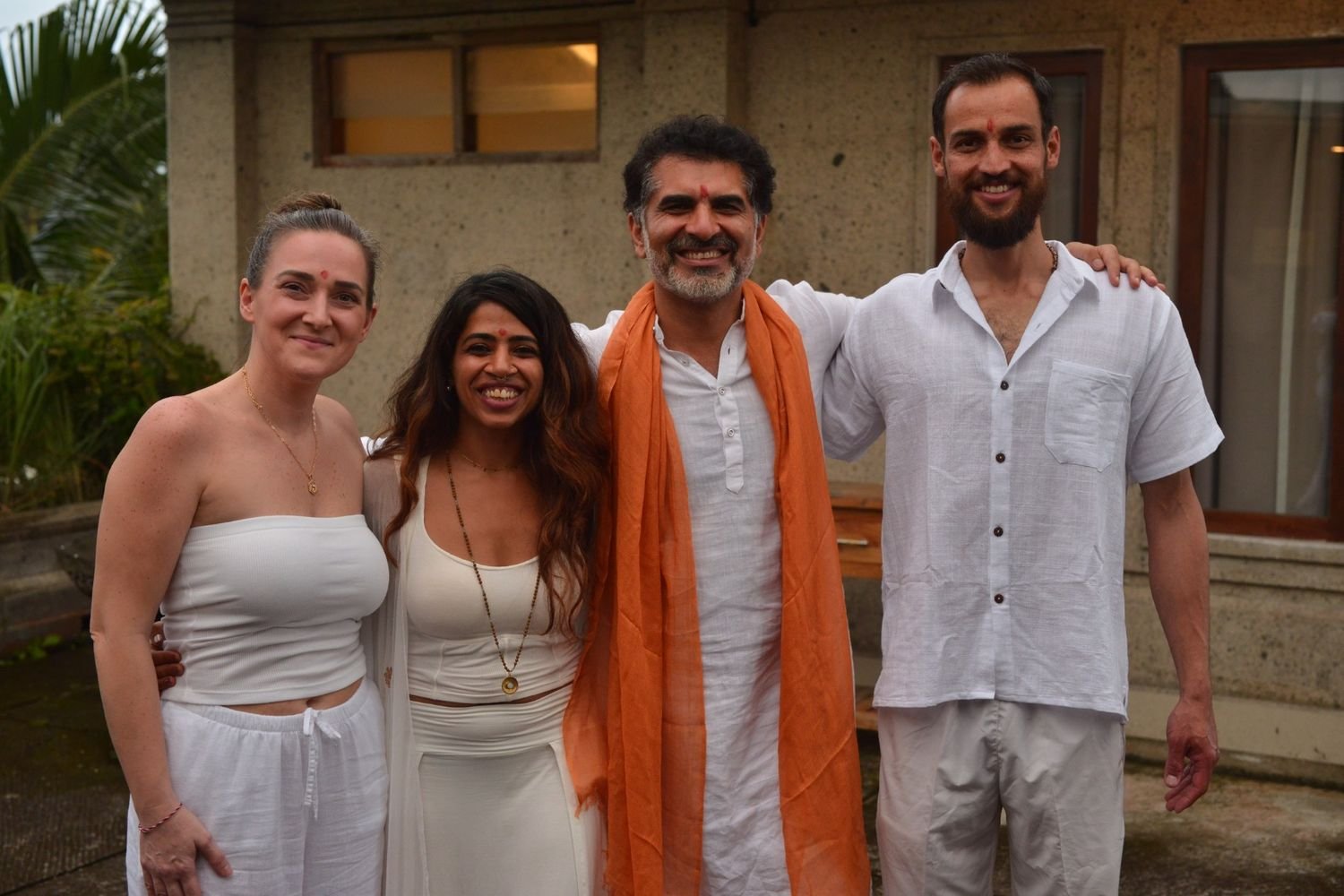
Yoga New Vision is based in central Ubud and is led by experienced Indian teachers, including Deep Kumar. The school is known for its “Meditative Hatha Vinyasa” approach, which blends movement, breath, stillness, and mindfulness into one connected style. The name explains the method clearly: Vinyasa flow built on a Hatha foundation.
The teaching is alignment-based, with a clear focus on injury prevention. This helps new teachers build safe, thoughtful flow sequences. Class sizes are kept small, so students receive personal guidance and real attention to their practice. If you want a flow training rooted in Indian tradition, this school stands apart from many of the more Western-style studios in Bali.
The central Ubud location also gives students a rich cultural experience, with temples, cafes, and the wider yoga community close by.
Best for students who want an authentic, India-rooted flow training with a meditative, alignment-focused approach and small classes.
Think twice if you want a large, high-energy social campus. Yoga New Vision is more intimate and traditional in feel.
View Full Profile on YTTinBali →
What Is a Vinyasa Yoga Teacher Training?
A Vinyasa yoga teacher training is a course that teaches you how to lead flowing yoga classes, where movement is linked to breath in smooth, creative sequences. Most programs are 200 hours and cover asana, sequencing, pranayama, anatomy, philosophy, and teaching methodology. The main focus is learning how to build and guide a safe, engaging flow class.
Vinyasa, also called “flow,” was adapted from the more structured Ashtanga system. It keeps the breath-to-movement link of Ashtanga but gives teachers more freedom to design the sequence instead of following one fixed series. That freedom is one of the main reasons students choose Vinyasa. A good Vinyasa training teaches you how to read a room, sequence safely, and create classes that feel fresh, balanced, and intentional.
How Vinyasa Fits With Hatha, Ashtanga, and Yin
A strong Vinyasa training usually pairs flow with the styles that support it. Yoga styles are connected, and a complete course often combines a few key approaches: Hatha for foundations, Vinyasa for creative movement, and often Ashtanga or Yin for structure and balance.
Here is how the main styles relate, so the curriculums on this page are easier to compare:
- Hatha is the foundation and the broad umbrella term for physical yoga. In a class schedule, it usually means a slower practice where you hold poses and learn alignment, breath, and body awareness. Almost every training starts here.
- Vinyasa is the flowing core. It links breath to movement in creative sequences and developed from Ashtanga.
- Ashtanga is a fixed, repeating sequence that also links breath to movement. Because Vinyasa grew out of Ashtanga, many schools teach an Ashtanga base to give flow more structure.
- Yin is the slow, passive counterbalance, with long holds that target connective tissue. It balances the active energy of Vinyasa practice.
So when a school lists “Hatha, Vinyasa, Ashtanga” or “Vinyasa, Yin, Kundalini,” it usually means the course is trying to give you a full flow training: a foundation to stand on, a flow style to lead, and a counterbalance to make your teaching more complete. When comparing schools, ask whether Vinyasa is a core daily practice and whether the rest of the style mix supports the way you want to teach.
Why Bali Is One of the Best Places for Vinyasa Yoga Teacher Training
Bali is widely seen as one of the world’s leading destinations for yoga teacher training outside India. It brings together a large community of Yoga Alliance schools, a warm tropical climate, relatively lower living costs, and a simple visa-on-arrival process for many nationalities. This makes a month-long training more practical and affordable for many students.
Vinyasa training works especially well in Bali. The island’s modern, international yoga scene leans toward creative flow, so you can find experienced Vinyasa teachers, beautiful shalas, and many chances to practise. Several of Bali’s best-known schools were built around flow from the beginning.
Bali is also a Hindu island where spirituality is visible in daily life. Temples, offerings, ceremonies, and community rituals are part of the local culture. For yoga students, this adds another layer to the experience. You are not only studying flow inside a classroom, you are learning in a place where ritual, nature, and community are present every day.
The island is comfortable for students too. Ubud and Canggu have excellent plant-based food, wellness cafes, and a large international yoga community. Uluwatu, Sanur, and Nusa Lembongan offer quieter settings for students who want more focus and less movement between classes.
Where Should You Do Your Vinyasa Training in Bali?
Bali may look small on a map, but traffic can make travel longer than expected. Your location shapes your whole training experience, including your rest days, food options, social life, and how calm or busy your schedule feels. Here is how the main areas compare for a flow training.
Spiritual, green, and surrounded by jungle and rice paddies. Best for deep immersion and the widest choice of Vinyasa schools. Most schools on this list are based here.
Surf-focused, social, and modern. Best for students who want flow training and Bali lifestyle together, with cafes, beaches, and a large international community.
Clifftop, ocean-focused, and quieter. Best for beach lovers who want ocean-view shalas and a more focused setting than Canggu.
Peaceful, island-based, and beachfront. Best for deep focus and a serious practice block away from Bali’s busiest areas.
Ubud is the most popular choice for flow training because it has the most schools, a strong yoga community, and the classic Bali yoga atmosphere. Canggu suits students who want a social beach-town experience. Uluwatu works well for ocean views and a calmer pace, while Nusa Lembongan is best for a quiet, immersive training block by the sea.
How Much Does a Vinyasa Yoga Teacher Training in Bali Cost?
A Vinyasa yoga teacher training in Bali can cost under $1,000 at the low end and more than $7,000 for premium or luxury programs. For most first-time students, the main option to compare is the 200-hour YTT, because this is the standard starting point for professional teaching.
| Program | Typical Price Range (USD) | Duration | Yoga Alliance Credential |
|---|---|---|---|
| 100-Hour YTT | $900 – $1,800 | 10–14 days | Not independently registerable |
| 200-Hour YTT | $1,700 – $4,000 | 21–28 days | RYT-200, the usual starting point |
| 300-Hour YTT | $2,500 – $5,000 | 28–35 days | Leads toward RYT-500 with your 200hr |
| 500-Hour YTT | $4,000 – $7,000+ | 45–60 days | RYT-500 |
Simple rule: For a good 200-hour Vinyasa training in Bali, many students should expect to spend around $2,500 to $3,500 for a quality program with accommodation or strong inclusions. Cheaper programs can still be good, but you should check class size, teacher experience, accommodation quality, and how much personal feedback you will receive.
Programs below $1,700 are not automatically poor quality, but they need closer checking. A lower price may mean bigger groups, basic rooms, fewer meals, less experienced trainers, or less personal feedback. Programs above $4,000 usually include private rooms, smaller groups, senior trainers, or a resort-style setting. This may be worth it if comfort and personal attention are important to you.
If you already know your preferred school and dates, book early. Many schools offer early bird pricing for students who book several months ahead, and this can save a meaningful amount on popular dry-season intakes.
How to Choose the Right Vinyasa Yoga Teacher Training
Every school has beautiful photos and positive testimonials. To choose properly, look beyond the surface and check the details that will affect your real experience.
- Check that Vinyasa is genuinely core. Confirm that flow is a main daily practice, not a small add-on. Look at how the curriculum divides time between Hatha foundations, Vinyasa flow, and other styles.
- Check Yoga Alliance registration. If you want the RYT path, confirm the school is listed as a Registered Yoga School on the Yoga Alliance website. Do not rely only on badges shown on the school’s own site.
- Check the lead trainer. Ask who will actually teach the course, then review their experience, style, and whether they specialise in flow or teach it as a secondary style.
- Look at class size. Smaller groups usually mean more personal feedback. A class of 12 and a class of 35 can feel completely different.
- Ask for the curriculum. A good flow-based 200-hour training should clearly cover sequencing, asana, anatomy, pranayama, meditation, philosophy, teaching methodology, and real teaching practice.
- Read third-party reviews. Do not rely only on testimonials from the school’s own website. Check Google, Facebook, Tripadvisor, and Yoga Alliance where available.
How to Find Real Reviews for Yoga Schools in Bali
Reviews are useful, but only if you read them carefully. A perfect-looking rating does not always show the full picture. Google, Facebook, Tripadvisor, and Yoga Alliance each have limits, but together they give a stronger view than a school’s own testimonial page.
Look for reviews with detail. The most useful reviews mention the teachers, daily schedule, accommodation, food, feedback, and how the school handled problems. Pay close attention to repeated patterns. If many students praise the same teacher or the same level of support, that is a helpful signal. If many students mention disorganisation or a gap between the advertised program and the real experience, take that seriously.
Be cautious if every review sounds the same, if many reviews were posted in a short period, or if a school has very few reviews despite claiming to be well established. At YTTinBali, we make this easier by aggregating public review counts from multiple sources where available, so you can compare review signals, dates, pricing, and styles in one place.
- Vinyasa is a core daily practice, not a minor add-on
- The style mix, such as Hatha, Ashtanga, and Yin, supports how you want to teach
- The school is Yoga Alliance registered for the level you want
- Class size is small enough for real teaching practice
- The curriculum lists sequencing, anatomy, philosophy, and practicum
- Third-party reviews are detailed, recent, and consistent
- The price matches what is actually included
Ready to Choose Your Bali Vinyasa YTT?
There is no single best Vinyasa yoga teacher training school in Bali for everyone. The right choice depends on your goal, budget, preferred location, and how much support you want during the course. Look at each school’s full style mix, not just its rank, to find the training that matches how you want to teach.
If you want strong teaching practice and confidence, look closely at Radiantly Alive. If you want an affordable, flow-focused course, Vinyasa Yogashala may suit you. All Yoga Training is a strong pick if you want a structured Ashtanga Vinyasa base on a quiet island. If you want flow plus depth, Alchemy is worth considering.
The best next step is to shortlist two or three schools, read their full profiles in our school directory, then use our comparison tool to compare pricing, dates, class size, styles, and review signals side by side. You can also explore the 300-hour YTT options if you already hold a 200-hour certificate and want to go deeper.
Frequently Asked Questions
What is a Vinyasa yoga teacher training?
A Vinyasa yoga teacher training is a course that prepares you to teach flowing yoga classes, where movement is linked to breath in creative sequences. Most programs are 200-hour trainings that cover sequencing, asana, anatomy, pranayama, philosophy, and teaching methodology. The focus is on building safe, creative flow classes rather than following one fixed series.
What is the difference between Vinyasa and Ashtanga yoga?
Both styles link breath to movement, but Ashtanga follows a fixed sequence that stays the same in every class, while Vinyasa gives the teacher freedom to design creative, changing sequences. Vinyasa was adapted from Ashtanga, which is why many Bali schools teach an Ashtanga base before adding the creativity and sequencing skills that define flow teaching. If you want freedom to create your own classes, choose a school with a strong Vinyasa module.
Do I need prior experience to do a Vinyasa YTT in Bali?
You do not usually need teaching experience, but most schools recommend at least six months of regular practice before joining a 200-hour Vinyasa training. Flow classes move quickly, so familiarity with common poses and breathwork helps. You do not need to be advanced or highly flexible, since flexibility is an outcome of practice, not a requirement to begin.
How much does a Vinyasa yoga teacher training in Bali cost?
A 200-hour Vinyasa YTT in Bali usually costs between $1,700 and $4,000, with many quality programs sitting around $2,500 to $3,500 including accommodation or strong inclusions. Shorter 100-hour courses can cost under $1,800, while advanced 300-hour and 500-hour programs usually cost more. Always check what the price includes, because accommodation, meals, class size, and feedback vary widely.
When is the best time to do a Vinyasa YTT in Bali?
The dry season, from April to October, is the most popular time because the weather is better for outdoor practice and rest-day exploring. May, June, September, and October often offer pleasant weather without the highest peak-season crowds. The wet season can still work well if you want lower prices and a quieter atmosphere.
{ "@context": "https://schema.org", "@type": "FAQPage", "mainEntity": [ { "@type": "Question", "name": "What is a Vinyasa yoga teacher training?", "acceptedAnswer": { "@type": "Answer", "text": "A Vinyasa yoga teacher training is a course that prepares you to teach flowing yoga classes, where movement is linked to breath in creative sequences. Most programs are 200-hour trainings that cover sequencing, asana, anatomy, pranayama, philosophy, and teaching methodology. The focus is on building safe, creative flow classes rather than following one fixed series." } }, { "@type": "Question", "name": "What is the difference between Vinyasa and Ashtanga yoga?", "acceptedAnswer": { "@type": "Answer", "text": "Both styles link breath to movement, but Ashtanga follows a fixed sequence that stays the same in every class, while Vinyasa gives the teacher freedom to design creative, changing sequences. Vinyasa was adapted from Ashtanga, which is why many Bali schools teach an Ashtanga base before adding the creativity and sequencing skills that define flow teaching. If you want freedom to create your own classes, choose a school with a strong Vinyasa module." } }, { "@type": "Question", "name": "Do I need prior experience to do a Vinyasa YTT in Bali?", "acceptedAnswer": { "@type": "Answer", "text": "You do not usually need teaching experience, but most schools recommend at least six months of regular practice before joining a 200-hour Vinyasa training. Flow classes move quickly, so familiarity with common poses and breathwork helps. You do not need to be advanced or highly flexible, since flexibility is an outcome of practice, not a requirement to begin." } }, { "@type": "Question", "name": "How much does a Vinyasa yoga teacher training in Bali cost?", "acceptedAnswer": { "@type": "Answer", "text": "A 200-hour Vinyasa YTT in Bali usually costs between $1,700 and $4,000, with many quality programs sitting around $2,500 to $3,500 including accommodation or strong inclusions. Shorter 100-hour courses can cost under $1,800, while advanced 300-hour and 500-hour programs usually cost more. Always check what the price includes, because accommodation, meals, class size, and feedback vary widely." } }, { "@type": "Question", "name": "When is the best time to do a Vinyasa YTT in Bali?", "acceptedAnswer": { "@type": "Answer", "text": "The dry season, from April to October, is the most popular time because the weather is better for outdoor practice and rest-day exploring. May, June, September, and October often offer pleasant weather without the highest peak-season crowds. The wet season can still work well if you want lower prices and a quieter atmosphere." } } ] }